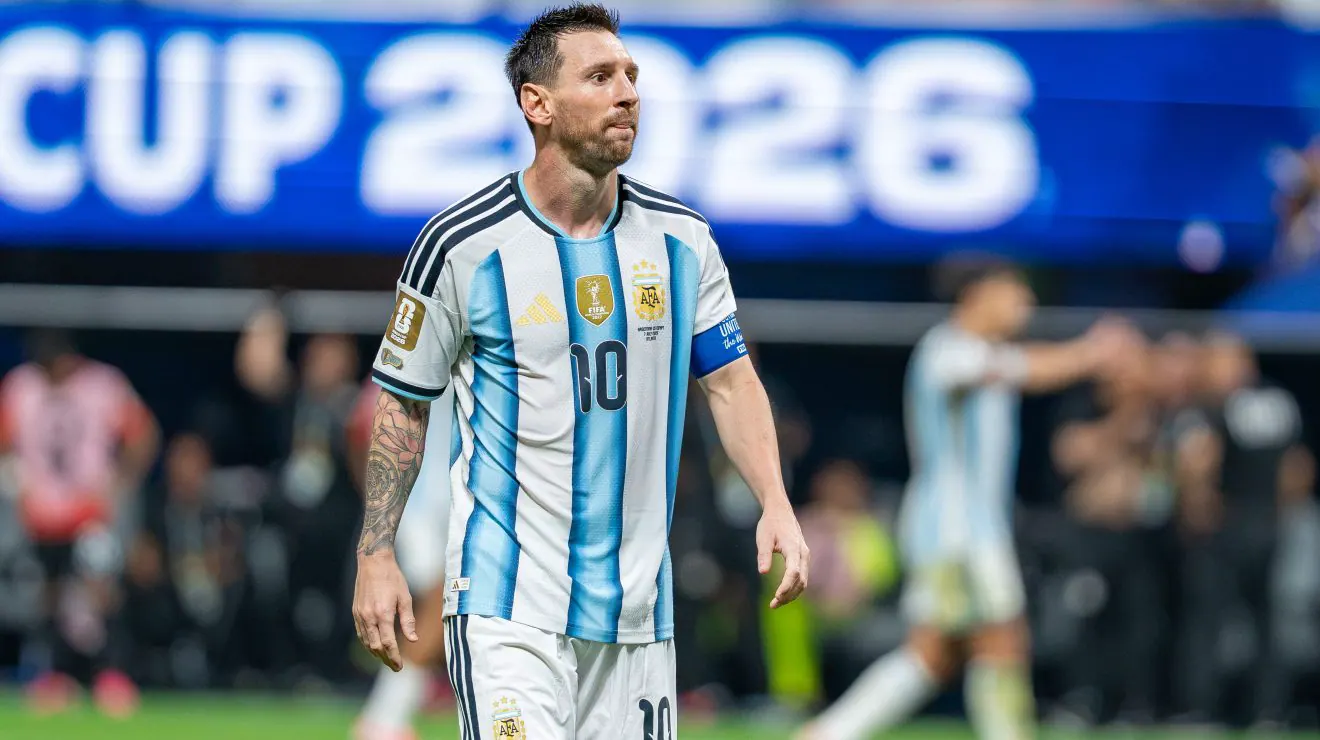
When Lionel Messi makes his final appearance for Argentina on Tuesday, it will mark the end of an era that began with uncertainty and evolved into one of the most enduring relationships in sporting history. The farewell match against Benin at Buenos Aires' Monumental stadium brings to a close an international career that has spanned more than 20 years. Messi's journey with Argentina began when he was a teenager, and his country was still trying to identify him.
Messi moved to Barcelona as a teenager, and while Spain tried to persuade him to represent them, Argentina barely knew he existed. At the 2003 Under-17 World Cup in Finland, Spain beat Argentina 3-2 after extra time in the semi-finals. A young Cesc Fabregas, who scored twice and was Messi's teammate at Barcelona's La Masia academy, told Argentine delegates afterwards that they lost because Spain had "your best player at Barcelona and he's a genius."
Finding Messi from Rosario proved difficult for Argentine football authorities. Argentine Football Association employee Omar Souto tracked down the Messi family in Spain through a Rosario telephone directory, only to ask for "Leonardo." The confusion extended to the paperwork, with the AFA sending Barcelona a fax asking about a player called "Mecci," with a double "c" in the surname because officials believed he might be Italian.
After the initial complications, Messi played two under-20 friendlies for Argentina in 2004, marking his first appearances in the blue and white stripes. However, scepticism lingered, and at the 2005 Under-20 World Cup in the Netherlands, Messi began on the bench as Argentina lost their opening game. There was strong resistance to calling up a kid who didn't play in the country, and he had to fight against early suspicions and being considered a foreigner because he lived in Spain.
Messi faced criticism for failing to reproduce his club form and was labelled "pecho frio," lacking heart or fire, by some fans. However, a World Cup qualifier against Colombia in 2011 began to change that perception, as Messi helped Argentina rally from a goal down to win in difficult conditions. He was exhausted and even vomiting, but he ended up winning, and it was the first time fans saw him differently.
The bond between Messi and Argentina strengthened when he briefly retired after Argentina's penalty shootout defeat by Chile in the 2016 Copa America final. Rather than blame him, Argentines pleaded publicly for him to return. People realised he was not responsible for the defeats and was the one getting them to finals. Argentine journalist and author Sergio Levinsky noted that Messi went through many different eras, suffering enormously with the national team at first.
As Messi says goodbye to international football, his legacy with Argentina is cemented. According to Levinsky, Messi's journey is a love story under construction, one that has endured for over two decades. The relationship between Messi and Argentina has been a long and hard-won one, but it has ultimately produced some of the most memorable moments in the country's football history.
Key points
- Messi's international career with Argentina spanned over 20 years, a journey that began with uncertainty and evolved into one of the most enduring relationships in sporting history.
- Messi faced criticism and scepticism early in his career with Argentina, but he eventually won over fans with his performances.
- Messi's bond with Argentina strengthened when he briefly retired after the 2016 Copa America final, with fans pleading for him to return.