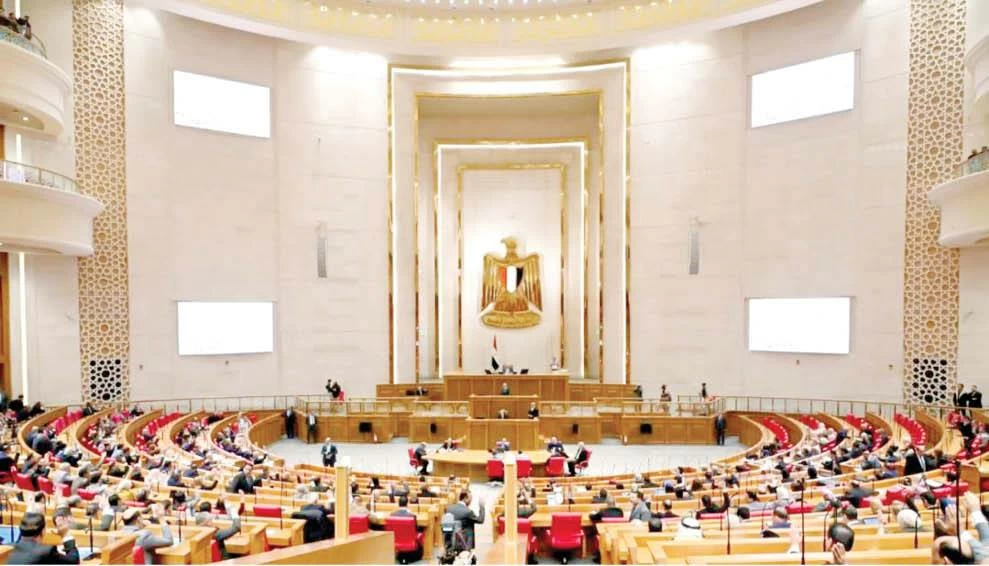
The Egyptian House of Representatives is set to convene its second session of the third legislative term today, following a presidential decree summoning the assembly. The opening session will commence at 1:00 PM, during which the speaker will announce the start of the new session and read out the president's decree. This decree formally ends the previous session and initiates the new one, marking a significant shift in the legislative agenda.
A key item on the agenda for today's session is the discussion of President Abdel Fattah el-Sisi's objections to Article 25 of the proposed law establishing Kayan University within the Egyptian Armed Forces for Applied Sciences. This law has been a subject of interest, given its implications for the country's educational and military sectors. The session will feature a presentation by Prime Minister Mostafa Madbouly on the government's stance regarding the presidential objections, providing insight into the administration's strategy moving forward.
The House of Representatives will also address several other matters during its sessions. Notably, the assembly will hear from Prime Minister Madbouly on various issues concerning the government's policies and legislative priorities. This comprehensive approach aims to ensure that all critical topics are adequately covered and discussed, reflecting the parliament's commitment to addressing the nation's needs.
In addition to discussing the Kayan University law, the parliament will focus on the formation of its specialized committees. On Sunday, the House of Representatives will convene at 11:00 AM to announce the composition of these committees and open the floor for members to submit proposals and objections. This process is crucial for the effective organization and functioning of the parliament, as these committees play a pivotal role in scrutinizing and debating legislation.
The formation of the specialized committees is a meticulous process that involves careful consideration of members' expertise and interests. By allowing members to propose and object to committee assignments, the parliament ensures a balanced and representative distribution of tasks. This, in turn, enhances the efficiency and productivity of the legislative body, enabling it to tackle a wide range of issues effectively.
Following the announcement of committee compositions, the parliament will proceed to finalize the election results for the committees' offices. This step is essential for completing the organizational structure of the parliament and empowering its various committees to carry out their mandates. The elections will determine the leaders and members of these committees, who will be responsible for driving the legislative agenda forward.
The new session of the Egyptian House of Representatives is poised to address critical issues facing the nation, from legislative reforms to the establishment of new educational institutions. With a comprehensive agenda that includes discussions on presidential objections, committee formations, and key policy matters, the session promises to be a productive and significant one. As the parliament convenes, stakeholders and citizens alike will be watching closely, anticipating the outcomes of these deliberations and their potential impact on Egypt's future.
Key points
- The Egyptian House of Representatives begins its new session today, discussing presidential objections to a law establishing Kayan University.