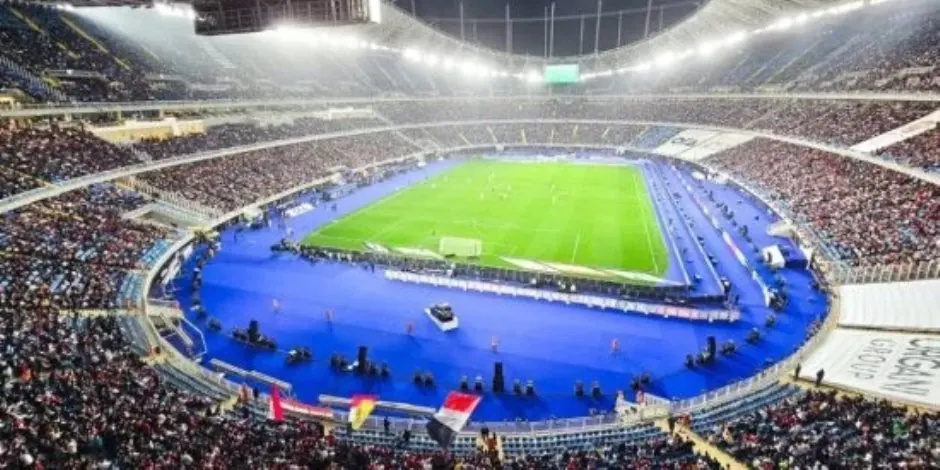
The world of football has witnessed a surge in the development of massive stadiums in recent years. These structures play a significant role in creating an exceptional atmosphere during matches and hosting major international tournaments. Egypt's New Capital Stadium is one such example, boasting an impressive capacity that places it among the world's largest stadiums. According to the Football Ground Guide, the stadium ranks fourth globally.
The largest stadium in the world is the Rungrado 1st of May Stadium in Pyongyang, North Korea, with a massive capacity of 114,000 spectators. The stadium, which opened in 1989, serves as the primary venue for North Korea's national team and hosts various sports events and celebrations. Its unique architectural design features 16 concrete arches inspired by the shape of a lotus flower. The stadium spans an impressive 21 hectares and consists of eight floors.
The second-largest stadium is Camp Nou, the home of Spanish club FC Barcelona, with a capacity of 105,000 spectators. The stadium has hosted numerous high-profile matches, including World Cup games, European Championships, and Champions League finals. Currently, it is undergoing significant renovations, including upgrades to its seating, entrances, and communication systems. Camp Nou returned to action in November 2025 after a 906-day renovation.
The third-largest stadium is the FNB Stadium in Johannesburg, South Africa, with a capacity of 94,736 spectators. The stadium has hosted several major sports events, including the 2010 World Cup final between Spain and the Netherlands. It has also been used for various other events, including the last public appearance of Nelson Mandela. The stadium underwent significant renovations in preparation for the 2010 World Cup.
Egypt's New Capital Stadium ranks fourth globally with a capacity of 93,940 spectators. The stadium's design is inspired by the headgear of ancient Egyptian Queen Nefertiti, blending Egyptian heritage with modern sports architecture. The project is part of a larger sports complex that includes a training stadium, indoor sports halls, and an Olympic-sized swimming pool. The stadium represents a significant addition to Egypt's sports infrastructure.
The fifth-largest stadium is the Lusail Stadium in Qatar, which played a crucial role in the 2022 World Cup. The stadium hosted the final match between Argentina and France, as well as several other games. During the World Cup, the stadium's capacity was 88,966 spectators. Plans are underway to reduce the capacity to 40,000 spectators in the future.
The development of massive stadiums like Egypt's New Capital Stadium reflects the growing importance of sports infrastructure in hosting international events. These stadiums not only provide an exceptional experience for spectators but also contribute to the growth of sports in their respective countries. With its impressive capacity and state-of-the-art facilities, Egypt's New Capital Stadium is poised to become a major hub for sports events in the region.
Key points
- Egypt's New Capital Stadium has a capacity of 93,940 spectators.
- The stadium's design is inspired by ancient Egyptian Queen Nefertiti's headgear.
- The stadium is part of a larger sports complex, including a training stadium and indoor sports halls.