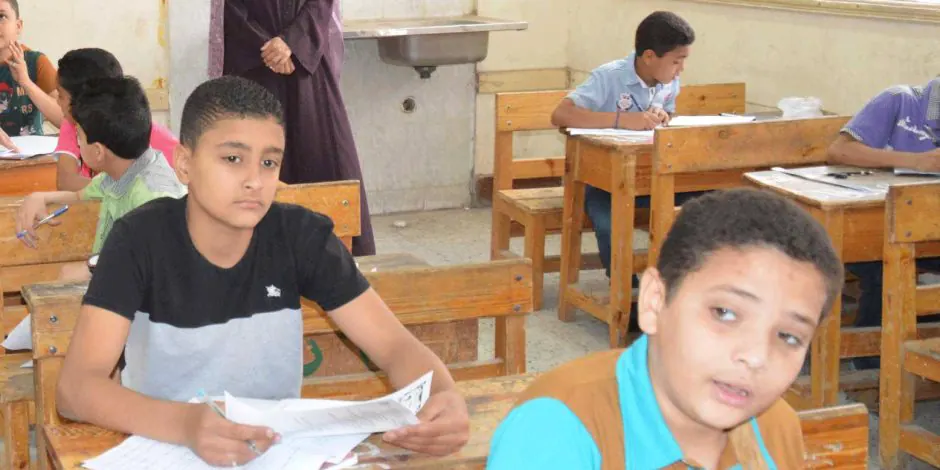
The Egyptian Ministry of Education has announced the evaluation methods for students in the first and second grades of primary school for the new academic year. The evaluation will be based on several axes and tools, including end-of-semester exams, homework, class notebooks, weekly evaluations, monthly tests, and attendance and behavior. The total score will be 100 degrees. This move aims to provide a comprehensive assessment of students' performance.
According to the Ministry, the evaluation breakdown for first and second-grade students is as follows: end-of-semester exams will account for 60 degrees, homework for 5 degrees, class notebooks for 5 degrees, weekly evaluations for 10 degrees, monthly tests for 15 degrees, and attendance and behavior for 5 degrees. This evaluation system is designed to assess students' progress and identify areas for improvement.
The Ministry has also outlined the curriculum for students in the first, second, and third grades of primary school. The curriculum includes several subjects, such as Arabic, English, mathematics, religious education, and physical education. The number of periods and hours allocated to each subject varies. For example, Arabic will have 4.5 periods and 229 hours, while English will have 2.5 periods and 103 hours.
The Ministry has emphasized that the total number of periods per week for primary school students is 145, with two additional periods for English language curriculum in language schools and private schools. Each period will last for 100 minutes, and specialized teachers will be responsible for teaching their respective subjects to each grade level.
The physical education and health curriculum will be implemented through a guide for physical education teachers. The Ministry has also introduced an activity called "Tokkastu" with half a period and 26 hours. This activity aims to provide students with a well-rounded education.
The new academic year brings significant changes to the education system in Egypt. The Ministry's efforts aim to improve the quality of education and provide students with a comprehensive learning experience. The evaluation methods and curriculum outlined for primary grades are expected to have a positive impact on students' performance and academic achievement.
The Ministry's announcement has provided clarity on the evaluation methods and curriculum for primary school students. Parents and students can now prepare for the new academic year with a clear understanding of what to expect. The Ministry's efforts to improve education in Egypt are ongoing, and these changes are expected to have a lasting impact on the education system.
Key points
- The Egyptian Ministry of Education has outlined evaluation methods and curriculum for primary grades, aiming to provide a comprehensive assessment of students' performance.
- The evaluation breakdown for first and second-grade students includes end-of-semester exams, homework, class notebooks, weekly evaluations, monthly tests, and attendance and behavior.
- The curriculum for primary school students includes subjects such as Arabic, English, mathematics, religious education, and physical education, with a total of 145 periods per week.