In China's Hebei province, a comprehensive modernization effort is underway, harmoniously integrating human and technological elements. A recent field trip to several cities and villages revealed that the transformations taking place are not isolated projects, but rather interconnected components of a cohesive system. This system seamlessly merges infrastructure development with industrial innovation, clean energy with digital economy, and urban modernization with improved public services. Hebei province spans approximately 188,000 square kilometers and achieved a local GDP of over 4.93 trillion yuan in 2025.
Hebei is home to around 15,500 high-tech companies and 28,000 small and medium-sized tech firms at the national level. However, these numbers alone do not fully capture the essence of the ongoing transformation. Strategically located within the Beijing-Tianjin-Hebei triangle, Hebei has been granted a unique position in the modernization process. This placement has turned the province into a convergence point between the functions of the capital and the resources of the three regions. The province effectively combines an ancient industrial base with a new economy driven by innovation, technology, and clean energy.
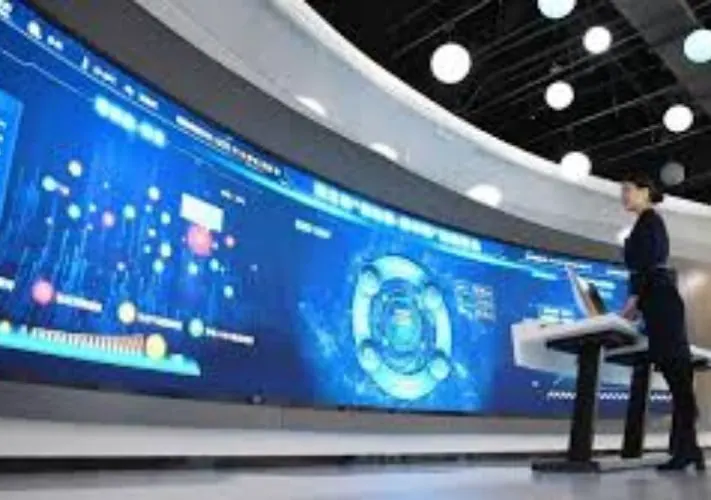
The Xiongan New Area exemplifies this vision. Launched in 2017, Xiongan was not merely conceived as an urban extension but as an experimental zone for building a futuristic city that anticipates future needs. The area integrates digital infrastructure with green development and community services. Artificial intelligence and the Internet of Things are being deployed to manage various sectors of the city, alongside the ecological restoration of Baiyangdian Lake. This approach incorporates environmental protection into the construction process itself. Technology is not an end in itself but a tool for creating a more efficient and sustainable city.
The concept of a "15-minute city" is central to this vision, aiming to make essential services such as schools, shops, healthcare, sports, and cultural facilities accessible within a 15-minute walk. Even the public library in Xiongan, covering an area of 68,000 square meters with thousands of seats and books, extends its services beyond its walls. The library's offerings are made accessible through mobile robots and reading points in residential communities. This approach transforms knowledge into a service that can be easily accessed in daily life, rather than being confined within the library's walls.
In Huailai, a county near Beijing, a different aspect of modernization is unfolding. Here, energy and data are becoming integral to the new economy. The Huixin computing complex illustrates the intersection of massive data center needs with renewable energy possibilities. Server operations are linked to wind and solar power generation. Other facilities, such as the Qinhuai data center, utilize liquid cooling technology to enhance energy efficiency, reduce waste, and harness the heat generated by servers to warm nearby buildings and schools during winter.
In the provincial capital, Shijiazhuang, the focus shifts from data centers to the heart of the city and industry. The city, with its robust industrial base encompassing pharmaceuticals, electronics, communications, and manufacturing, is expanding its economy through research, development, and innovation. In 2025, R&D expenditure in Shijiazhuang reached 2.52%. Urban transformation has not been limited to factories and laboratories; the city has also reconfigured parts of its urban fabric by eliminating over 35 million square meters of informal construction and expanding public spaces.
Hebei's modernization effort also prioritizes cultural preservation and tourism. Historic sites are being revitalized through digital documentation and innovative presentation. The Wanlimiao Street in Shijiazhuang, a 500,000-square-meter complex, combines shopping, entertainment, culture, and heritage, attracting 59.74 million visitors in the first half of 2026. Similarly, the Shibapo site, a former hideout for the Communist Party of China, has been transformed into a space for history, education, and tourism, open to visitors.
Key points
- Hebei province's modernization strategy focuses on integrating technology, sustainability, and cultural preservation to create a balanced and innovative economy.