Egypt's Ministry of Solidarity recently conducted a study tour to Brazil to review the country's experience in social protection programs and cash transfer initiatives. The tour was led by Raft Shafik, Assistant Minister of Solidarity for Social Protection and Economic Empowerment. The Egyptian delegation included representatives from the Ministry of Labor and the National Social Insurance Authority. The tour was organized by the United Nations Economic and Social Commission for Western Asia (ESCWA) and the German Development Cooperation Agency.
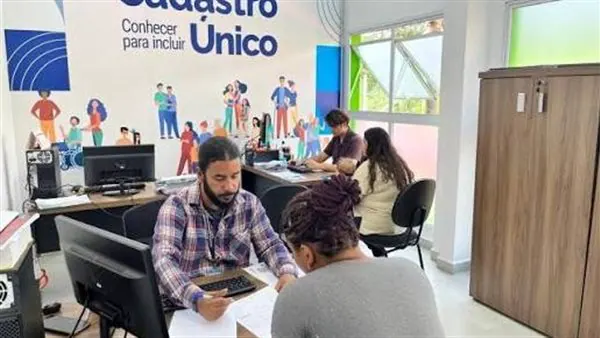
The study tour aimed to explore Brazil's experience in social protection programs, particularly the 'Bolsa Familia' cash transfer program. The Egyptian delegation met with representatives from Brazil's Ministries of Social Security, Development, and Social Assistance, and Labor. They discussed digital platforms for social protection services and mechanisms for transitioning from cash assistance to employment. The delegation also learned about Brazil's unified social registry, 'Cadastro Unico', which integrates data from various national databases to verify information instantly.
During the tour, Raft Shafik presented Egypt's 'Takaful and Karama' program, which provides conditional cash transfers to vulnerable families. He explained that the program uses a unified social registry linked to national ID numbers and integrates data from various government and national agencies. The program has expanded from 1.7 million families in 2014 to 4.7 million families currently, with an increase in budget from 6.8 billion EGP to 54 billion EGP in the 2025-2026 fiscal year.
The 'Takaful and Karama' program has contributed to a 2.3% reduction in the national poverty rate and a 9.6% decline in poverty among beneficiaries. The program provides two types of support: conditional cash transfers to families with children ('Takaful') and unconditional cash transfers to the elderly, people with disabilities, and orphans ('Karama'). In contrast, Brazil's 'Bolsa Familia' program focuses primarily on low-income families, while providing support to the elderly and people with disabilities through a separate program.
The Egyptian delegation learned about Brazil's experience in using a unified database to target beneficiaries and reduce duplication and waste. The 'Cadastro Unico' registry serves as a national database for low-income families and is used to determine eligibility for various social programs, including 'Bolsa Familia' and the Continuous Cash Benefit (BPC) program. This system has enabled Brazil to improve targeting of beneficiaries and utilize artificial intelligence to reduce errors.
The study tour provided valuable insights into Brazil's experience in social protection and cash transfer programs. The Egyptian Ministry of Solidarity aims to apply the lessons learned to enhance its own social protection programs and improve the lives of vulnerable families. The ministry is committed to maximizing the benefits of social protection programs for eligible families and individuals.
The 'Takaful and Karama' program has disbursed a total of 232.9 billion EGP since its inception in 2015, benefiting 8.3 million families. The program's expansion has been accompanied by an increase in budget and a growing number of beneficiaries. The Egyptian government continues to prioritize social protection and economic empowerment for vulnerable populations.
Key points
- Egypt's Ministry of Solidarity reviews 'Takaful and Karama' experience in Brazil to enhance social protection programs.
- The 'Takaful and Karama' program provides conditional and unconditional cash transfers to vulnerable families in Egypt.
- Brazil's 'Bolsa Familia' program serves as a model for Egypt's social protection initiatives, with a focus on using unified databases to target beneficiaries.