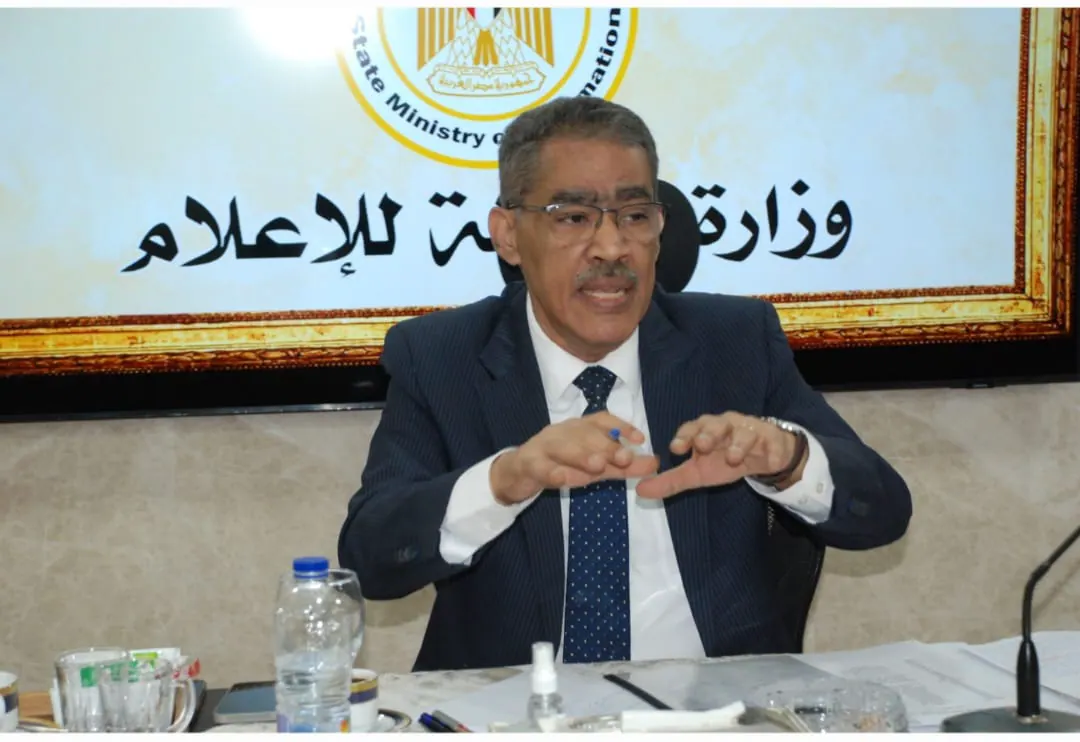
Egypt's Minister of Information, Diaa Rashwan, announced that the Ministry of State for Information will play a new role in monitoring social media platforms. The goal is to move forward with public lawsuits if they detect any attacks on societal values, national cohesion, human dignity, or individual privacy. This move is part of a broader government plan to regulate social media, which involves several ministries working together.
The announcement was made during a meeting with heads of online news websites. Rashwan emphasized that this role is mandated by the constitution and aims to organize social media's operations through legislative, legal, and executive measures. The government is also interested in issuing a law on freedom of information and recognizing citizens' right to access it. This comes as the government tightens its grip on social media, with the Higher Media Council warning media institutions and digital platforms against discussing family disputes and personal secrets.
The Egyptian government has been taking steps to regulate social media, with the National Telecommunications Regulatory Authority (NTRA) directing social media platforms to block independent accounts of children under 13 and activate "safe mode" for accounts of those between 13 and 15 years old. Platforms have been given three months to comply and present implementation plans within 30 days. The move has sparked debate among journalists and media professionals, with some arguing that it restricts press freedom.
During the meeting, Rashwan discussed the role of his ministry in coordinating between media institutions and state agencies. He emphasized the importance of developing the media's performance to raise public awareness and restore its leading position. Journalists and media professionals expressed concerns about the lack of information from state agencies and the need for a more transparent and efficient system for accessing information.
Rashwan proposed that online news websites establish a body to represent them and solve their problems. This suggestion sparked a debate among journalists, with some arguing that it could be seen as an attempt to create a parallel entity to the journalists' syndicate. The syndicate's former president and current member, Mahmoud Kamal, clarified that Rashwan's proposal did not imply creating a rival body to the syndicate.
The Egyptian economy has been facing challenges, with rising food prices and a significant increase in the cost of living. The government has been working to attract investments and implement economic reforms. The International Monetary Fund (IMF) has noted improvements in some economic indicators but highlighted the need for further reforms to address issues such as high debt and the need for more private sector involvement.
The government's efforts to regulate social media and monitor online content have raised concerns about press freedom and censorship. Journalists and media professionals have argued that these measures could restrict their ability to report on important issues and hold those in power accountable. The debate is set to continue as the government pushes forward with its plans to regulate social media and online content.
Key points
- The Egyptian government plans to monitor social media to protect societal values and national cohesion.
- The move has sparked debate among journalists and media professionals about press freedom and censorship.
- The government aims to regulate social media through legislative, legal, and executive measures.