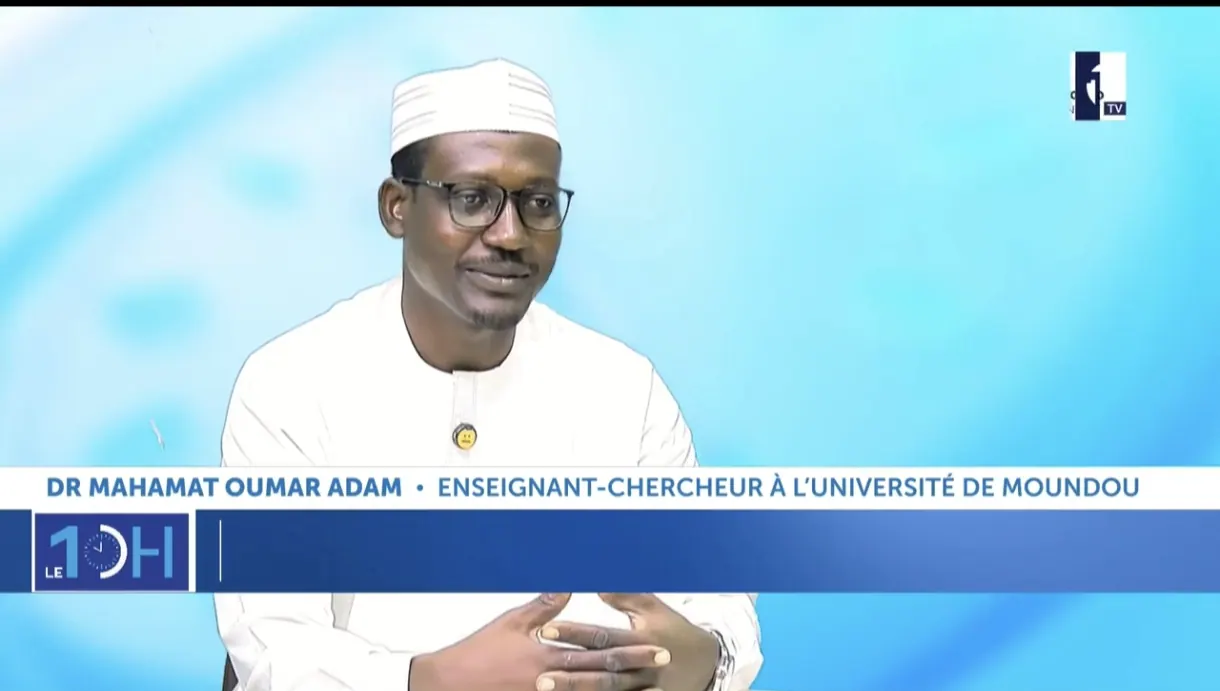
Dr. Mahamat Oumar Adam, a researcher at the University of Moundou, recently discussed the challenges of bilingualism in Chad on a local radio show. He emphasized that the issue is not just about language, but about the construction of the Chadian state. The 1996 Constitution recognizes French and Arabic as official languages, but in practice, French dominates administration, diplomacy, higher education, and research.
The history of bilingualism in Chad is complex. After independence, French was the sole official language, but Arabic gained recognition as a second national language in 1970. It was later enshrined in the 1978 Charter and fully recognized in 1996. However, this recognition was not just a pedagogical choice, but also a response to political tensions. Dr. Adam noted that the institutionalization of Arabic was influenced by the rise of political and military movements.
Despite its recognition, Arabic faces significant challenges. Dr. Adam argues that the problem lies not in the law, but in its implementation. He cited mental barriers, such as the perception that Arabic is associated with religion, rather than being a language of science, diplomacy, or culture. This perception leads to a lack of opportunities for those who speak Arabic, and many Arabophones abandon their language in favor of French.
The education system is also a major obstacle. At the university level, Arabic is often taught in a rudimentary way, with a focus on basic phrases and alphabet. Dr. Adam argues that if Chad is truly a bilingual country, Arabic should be taught from kindergarten to primary school. He also noted that some universities have created bilingual sections, but these are limited and not widespread.
Dr. Adam emphasizes the importance of valuing both literary Arabic and Chadian Arabic, a living language spoken in markets and villages. He argues that ignoring Chadian Arabic is ignoring part of Chad's identity. The discussion also highlighted the challenges of bilingualism in other African countries, where leaders often struggle to speak both official languages fluently.
The consequences of not implementing bilingualism effectively are significant. Dr. Adam noted that it creates social barriers, with Arabophones feeling excluded from francophone fields and vice versa. He argues that this can lead to a situation where bilingualism remains on paper, but not in reality. To address this, Dr. Adam advocates for a comprehensive approach to bilingualism, including education and institutional support.
Ultimately, Dr. Adam's discussion highlights the need for a nuanced approach to bilingualism in Chad. He argues that each country must develop its own strategy, taking into account its unique cultural and linguistic context. By addressing the challenges and obstacles to bilingualism, Chad can work towards a more inclusive and equitable society.
Key points
- The implementation of bilingualism in Chad is hindered by mental barriers and a lack of institutional support.
- The education system is a major obstacle to promoting Arabic as an official language.
- Dr. Mahamat Oumar Adam advocates for the valorization of both literary Arabic and Chadian Arabic.