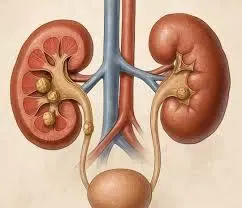
Egypt's Ministry of Health is working to improve the organ donation system, with a focus on expanding the base of living donors. According to Dr. Ayman Fathy Refai, a professor of kidney diseases and a member of the Higher Committee for Organ Transplantation, the country currently relies 100% on living donors, with no programs for deceased donors. This has resulted in a gap between the number of patients and available organs for transplantation.
Dr. Refai stated that kidney transplantation is the most effective solution for patients with end-stage renal disease, rather than dialysis. He noted that the Minister of Health, Dr. Khaled Abdel Ghaffar, issued a decree in May 2023 to form a scientific advisory council to improve the organ transplantation system. The council, led by Dr. Ahmed Halawa, a professor of organ transplantation at the University of Sheffield, aims to develop policies to increase the number of donors.
The advisory council has made several recommendations to expand the base of living donors. These include opening up the donor age range, which was previously limited to 60 years, and accepting cases of incomplete tissue compatibility. Dr. Refai explained that the goal is to prioritize the quality and safety of transplantation operations, rather than just increasing the number of donors.
Another key recommendation is the implementation of a paired kidney donation system, which allows a person who wants to donate to a relative but is not compatible to exchange their donation with another pair of donors and recipients. This system can be implemented in a phased manner, starting with a single center and then expanding to other centers.
The recommendations also include creating programs to follow up with donors after transplantation, expanding the use of laparoscopic surgery to remove kidneys from donors, and establishing standardized medical tests to ensure compatibility between donors and recipients. Dr. Refai emphasized that these measures aim to improve the performance of organ transplantation centers and reduce waiting lists.
The plan also involves setting standards for transplantation centers and evaluating their performance. Centers will be required to meet certain criteria, including the number of transplantation operations performed and the results of follow-up care. This aims to ensure that centers prioritize the quality of care and not just the number of operations.
The expansion of kidney transplantation is expected to reduce the financial burden on the state associated with dialysis sessions, as well as alleviate the suffering of patients with end-stage renal disease. With around 60,000 people undergoing dialysis, the Ministry of Health's new plan aims to increase the number of living donors and improve the organ donation process, ultimately reducing waiting lists and improving patient outcomes.
Key points
- Egypt's Ministry of Health aims to expand the base of living donors for kidney transplantation.
- The plan includes implementing a paired kidney donation system and expanding the use of laparoscopic surgery.
- The goal is to improve the performance of organ transplantation centers and reduce waiting lists.