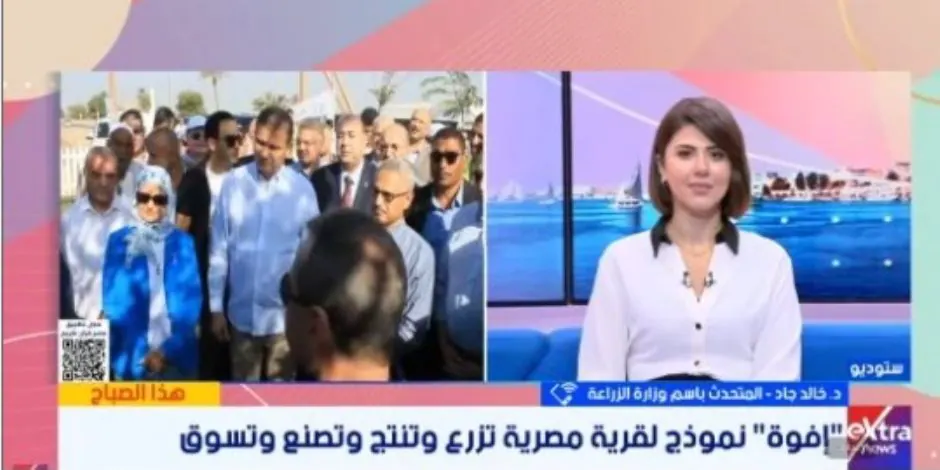
Egypt's Ministry of Agriculture is set to replicate the successful model of "Ifwa" village, a rural production hub in Beni Suef governorate, across the country. The village has been transformed into a productive unit, with residents producing their own needs and generating surplus for sale. This initiative aims to reactivate productive activities in Egyptian villages and turn them into integrated production units. The project started less than a year ago and has shown promising results.
The "Ifwa" village project involved implementing various production and development models, including beekeeping and honey production, animal feed production, dairy farming, and sericulture. The Ministry of Agriculture's research center has executed models for different activities that can be applied in Egyptian villages, generating a good profit margin and creating job opportunities. The goal is to enable villages to produce their own needs, reduce reliance on urban areas, and create a surplus for sale.
The Ministry of Agriculture's spokesperson, Dr. Khaled Gad, emphasized that the project's objective is to revive the role of Egyptian villages as productive units. He noted that some villages have become dependent on cities for their needs, and the ministry aims to support local production and achieve self-sufficiency. The ministry has selected several villages in different governorates to serve as nuclei for productive villages, which will replicate the successful models and apply suitable activities.
Dr. Gad revealed that the experiment has already started in many governorates, with villages being guided to choose suitable activities and production based on their natural resources. The ministry is also working to reduce production costs and improve product quality. He stressed the importance of raising awareness about proper agricultural practices, including the correct use of pesticides, to ensure safe and high-quality products at lower costs.
The Ministry of Agriculture aims to convert villages into productive units that can provide job opportunities for their residents, generate income for families, and reduce reliance on urban areas. This initiative seeks to restore the role of Egyptian villages as productive elements in the local economy. By replicating the "Ifwa" village model nationwide, the ministry hopes to promote rural development and improve living standards.
The "Ifwa" village model has demonstrated the potential for rural areas to become productive hubs, with residents engaged in various economic activities. The project's success has encouraged the Ministry of Agriculture to expand the initiative to other villages, with the goal of creating a network of productive villages across the country. This approach is expected to contribute to Egypt's economic growth and improve the livelihoods of rural communities.
The Ministry of Agriculture's efforts to promote rural development and productive villages are expected to have a positive impact on Egypt's economy and society. By empowering rural communities to become productive units, the ministry aims to reduce poverty, improve living standards, and promote sustainable development. The replication of the "Ifwa" village model nationwide is a significant step towards achieving these goals.
Key points
- The Egyptian Ministry of Agriculture plans to replicate the "Ifwa" village model nationwide to promote rural development and productive villages.
- The "Ifwa" village project has demonstrated the potential for rural areas to become productive hubs, with residents engaged in various economic activities.
- The initiative aims to restore the role of Egyptian villages as productive elements in the local economy and improve living standards.