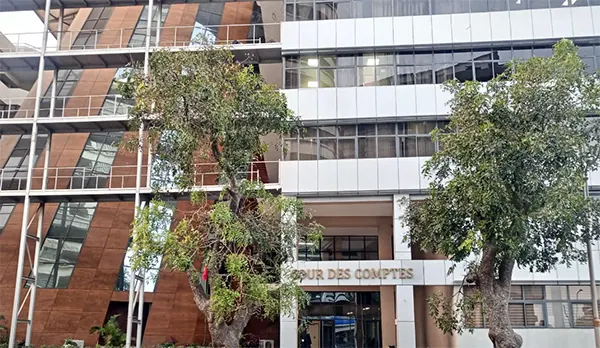
The publication of the Court of Accounts' report on Senegal's public finances for 2019-2024 in February 2025 caused a stir. The report revealed a real budget deficit of 12.30% of GDP, significantly higher than the previously announced 4.90%. It also identified thousands of billions of CFA francs in commitments considered "hidden debts". This has sparked controversy, with magistrate Yaya Amadou DIA publishing a book, L'Audit et l'État, presenting a counter-expertise to the report.
DIA's book disputes the report's conclusions, citing questionable methodological choices and interpretations of financial instruments and accounting mechanisms. He argues that evaluating public debt requires distinguishing between direct state commitments and guarantees, conditional commitments, and other financial mechanisms. The magistrate specifically contests the notion of "hidden debt", suggesting that around 3,000 billion CFA francs in conditional commitments and guarantees were incorrectly classified as direct state debt.
The book also examines the treatment of Certificats Nominatifs d'Obligations (CNO). DIA claims that the 546.7 billion CFA francs in CNO included in the debt stock were accounted for without considering the initial claims they replaced, risking double counting. He believes this distorted the state's cash situation. Furthermore, DIA disputes the interpretation of discrepancies between data from different Ministry of Finance structures, attributing these to technical and administrative constraints rather than intentional information concealment.
DIA argues that the report insufficiently considers exceptional circumstances, such as the COVID-19 pandemic, the Ukraine war, and the energy crisis, which affected public finances between 2019 and 2024. He advocates for evaluating public management in crisis situations, taking into account the context and potential consequences of strict rule application. The book does not deny difficulties or errors in public finance management but proposes improving control mechanisms.
The author suggests that better consideration of the economic context, reinforcement of technical expertise in control bodies, and regular monitoring of state financial operations could enhance public finance management. Through his publication, DIA aims to revive the debate on public account reading and state audit methods. His book presents a methodological, legal, and financial critique, opening a new controversy around the Court of Accounts' report.
The report's conclusions have sparked significant reactions in public debate. DIA's counter-expertise invites actors to confront analyses on a technical and documented basis. The controversy highlights the need for transparent and accurate assessment of public finances in Senegal. The book provides an in-depth analysis of the report's methodology and conclusions.
The publication of L'Audit et l'État has significant implications for the understanding of Senegal's public finances. It underscores the importance of critically evaluating reports and assessments to ensure accurate representation of the country's financial situation. The debate is expected to continue, with stakeholders engaging in discussions on the best approaches to manage and report public finances effectively.
Key points
- A Senegalese magistrate disputes the Court of Accounts' report on hidden debt.
- The report revealed a real budget deficit of 12.30% of GDP and identified thousands of billions of CFA francs in hidden debts.
- The magistrate's book presents a counter-expertise, citing methodological and interpretive issues with the report.