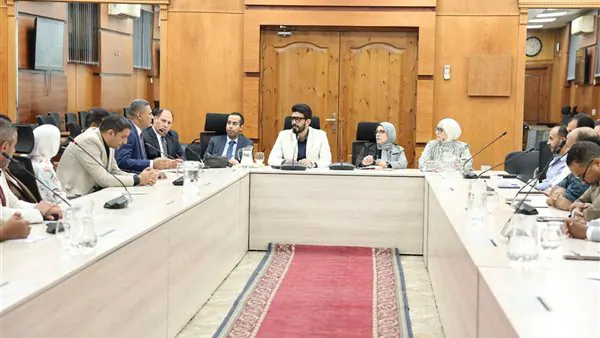
The Holding Company for Water and Wastewater in Egypt recently convened a meeting with general managers of internal audit and governance departments in subsidiary companies. The meeting aimed to discuss a roadmap for unifying work methodologies, developing internal control mechanisms, and risk management. This move is in line with directives from Engineer Randa El-Manshawey, Minister of Housing, Utilities, and Urban Communities, to establish institutional governance foundations and enhance performance efficiency and resource control.
Engineer Mostafa El-Shimy, Chairman of the Holding Company for Water and Wastewater, emphasized that developing the internal audit and governance system is a key aspect of improving institutional performance efficiency. This is achieved through enhancing transparency and accountability, controlling various company activities, and identifying potential risks. El-Shimy stressed the importance of unifying internal audit methodologies in subsidiary companies and promoting the independence and objectivity of auditors.
El-Shimy also highlighted that the effective role of internal audit extends beyond detecting shortcomings to providing recommendations that contribute to performance development, procedure improvement, and investment and asset protection. The company's goal is to ensure the proper implementation of procedures and efficient resource management. The meeting discussed the importance of adopting a unified methodology for risk-based audit, ensuring that audit efforts are directed towards priority activities.
Ahmed Taher, General Manager of the Internal Audit and Governance Department at the Holding Company, emphasized the need to adhere to the internal audit charter and strategic plan. He highlighted the importance of adopting a risk-based audit methodology, which ensures that audit efforts are directed towards priority activities and activities are properly controlled. Taher also stressed the importance of activating the advisory role of internal auditors, in addition to their regulatory role.
The meeting also discussed the development of a unified framework that defines the basic rules and methodology for the work of internal audit and governance departments in subsidiary companies. The framework aims to ensure the independence of internal auditors and avoid conflicts of interest. Participants reviewed the comprehensive concept of governance and risk management, as well as the distribution of audit activities according to risk degree and activity nature.
The meeting addressed the challenges and obstacles faced by internal audit and governance departments in subsidiary companies, including operational, logistical, and organizational challenges. Participants discussed proposals to address these challenges, which will help create a work environment that supports internal audit independence and enhances its ability to perform regulatory and advisory tasks efficiently.
The meeting concluded with an emphasis on the importance of working within a unified framework for internal audit and governance, monitoring the implementation of the strategic plan, and addressing challenges facing specialized departments. This aims to enhance the effectiveness of control and risk management, contributing to improved performance efficiency and protection of the assets and resources of the Holding Company and its subsidiary companies.
Key points
- The Holding Company for Water and Wastewater in Egypt aims to enhance internal audit and governance in subsidiary companies through a unified roadmap.
- The roadmap focuses on developing internal control mechanisms, risk management, and promoting transparency and accountability.
- The company seeks to ensure the independence of internal auditors and avoid conflicts of interest.