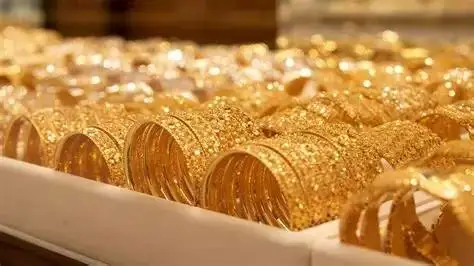
Egypt's gold market has shown resilience, with prices rising 5.57% since January 2026, even as global gold prices plummeted by over 30% from their historical peak in January. The local market's performance is attributed to the significant depreciation of the Egyptian pound against the US dollar. According to data from the Egyptian gold market, the gram of gold of 21-carat, the most commonly traded, started the year at 5840 pounds and reached 7550 pounds on January 29, before closing at 6165 pounds on October 31, marking an increase of 325 pounds since the beginning of the year.
The global gold market, however, has experienced a substantial downturn, with the ounce dropping from $4332 at the start of the year to $3876.20 by the end of October, representing a loss of 10.5% since January and 30.7% from its historical high. The decline is linked to changes in interest rate expectations and the surge in the dollar's value, which has strengthened its position as a safe-haven asset. The dollar's rise against the Egyptian pound has played a crucial role in cushioning the impact of the global decline on the local market.
Slaaed Imbaby, Executive Director of one of Egypt's gold trading platforms, highlighted the importance of distinguishing between global and local market trends. He noted that the analysis of data from the Egyptian gold market during the period from January to October reveals a significant difference between the two markets. Imbaby pointed out that the rise in the dollar's value provided relative support to local prices, preventing a full transmission of the global decline to the Egyptian market.
The Egyptian pound's depreciation against the US dollar has been a key factor in determining gold prices locally. The dollar's value rose from 47.25 pounds at the beginning of the year to 56.05 pounds by the end of October. This development has led to a unique pricing equation in Egypt, where gold prices are influenced by three main factors: the global gold price, the dollar's value, and local supply and demand.
The global economic landscape has also played a significant role in shaping gold prices. The US Federal Reserve raised interest rates by 25 basis points in September to a range of 3.75% - 4% and kept them unchanged in October. These decisions, coupled with an annual inflation rate of 3.7% and a core rate of 2.6%, as well as an unemployment rate of 4.2%, have contributed to the dollar's strength and put pressure on gold as a non-yielding asset.
Looking ahead, the trajectory of gold prices is expected to be influenced by monetary policy, yields, and geopolitical tensions. In Egypt, the dollar's value against the pound will remain a critical factor in determining gold prices. A decline in global gold prices does not necessarily translate to a similar decline in Egypt, and vice versa, emphasizing the need for careful monitoring of pricing factors beyond short-term market fluctuations.
As the year comes to a close, Egypt's gold market is expected to continue navigating the complexities of global and local economic trends. The interplay between the dollar's value, global gold prices, and local demand and supply will remain crucial in shaping the market's performance. With the dollar's value and global economic trends being key influencers, market participants will be closely watching these factors to anticipate future price movements.
Key points
- Egypt's gold prices have increased by 5.57% since January 2026, despite a global decline of over 30%.
- The surge in the dollar's value against the Egyptian pound has supported local gold prices.
- The Egyptian gold market's performance is influenced by a unique equation of global gold prices, the dollar's value, and local supply and demand.