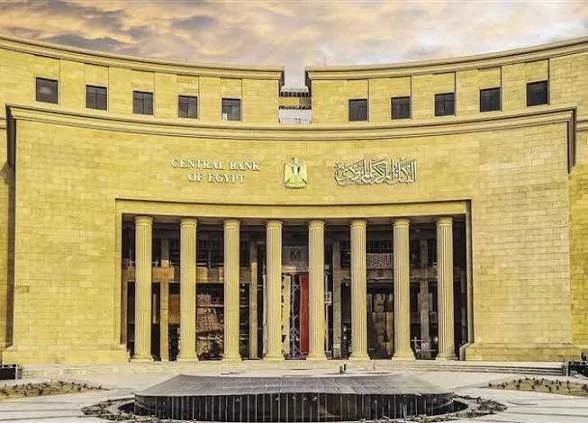
The Central Bank of Egypt announced that the country's net international reserves reached $57.35 billion at the end of September 2026. This represents an increase of $137 million from the previous month, when reserves stood at $57.21 billion. The rise in reserves is a positive indicator for Egypt's economy, which has been working to stabilize its financial situation.
According to the Central Bank, the international reserve increased by $920.6 million in August, reaching $57.2145 billion. This was a significant rise from July, when reserves were $56.2939 billion. The Central Bank's data also showed that reserves had increased by $1.22 billion in July, reaching $55.0723 billion. These gains reflect a steady upward trend in Egypt's foreign reserves.
Egypt's foreign reserves are comprised of a basket of major international currencies, including the US dollar, euro, British pound, Japanese yen, and Chinese yuan. The composition of the reserves is determined by the exchange rates of these currencies and their stability in international markets. The Central Bank has a plan in place to manage the reserves, which are used to finance imports and pay off external debts.
The primary function of Egypt's foreign reserves is to provide the necessary funds to import essential goods and services, pay off external debts, and address economic crises. The reserves are also used to maintain economic stability and confidence in the country's financial system. With the recent increase in reserves, Egypt's economy appears to be moving in a positive direction.
Since the end of December 2025, Egypt's net international reserves have risen by $5.9 billion, from $51.45 billion. This represents a significant increase, and reflects the country's efforts to boost its foreign reserves. The Central Bank's management of the reserves has been instrumental in achieving this goal.
The rise in Egypt's foreign reserves is a welcome development, as it provides the country with a buffer against economic shocks. The reserves can be used to address a range of economic challenges, from financing imports to paying off external debts. With its foreign reserves increasing, Egypt's economy is well-positioned to face future challenges.
In comparison to other countries, Egypt's foreign reserves are relatively high. For example, South Korea's foreign reserves fell to $440 billion in September. Egypt's ability to increase its reserves is a positive sign, and reflects the country's efforts to strengthen its economy. The Central Bank's management of the reserves will continue to play a critical role in maintaining economic stability.
Key points
- Egypt's foreign reserves reached $57.35 billion at the end of September 2026.
- The country's net international reserves have risen by $5.9 billion since the end of December 2025.
- The foreign reserves are used to finance imports, pay off external debts, and address economic crises.