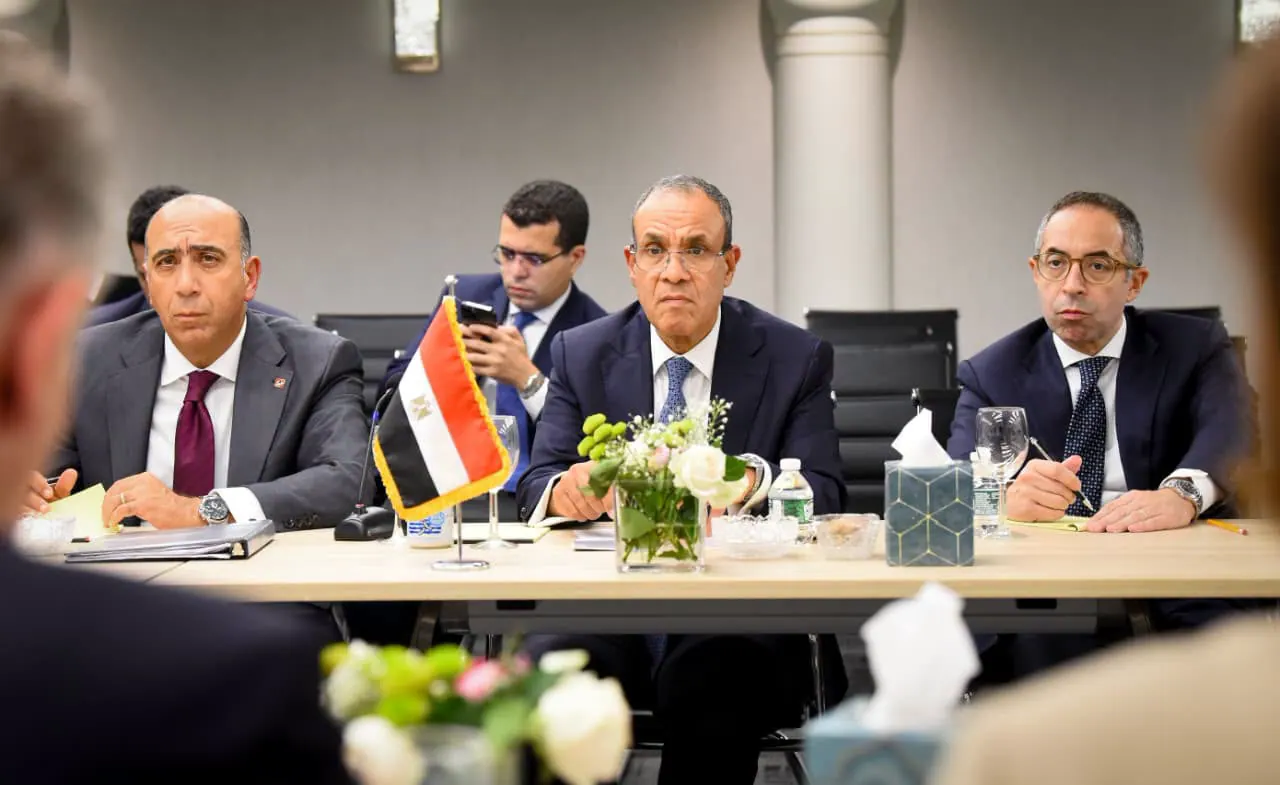
Egyptian Foreign Minister Badr Abdelatty emphasized the need for continued diplomatic efforts to address Iran's nuclear program during a meeting with International Atomic Energy Agency (IAEA) Director General Rafael Grossi. The talks took place on the sidelines of the 81st UN General Assembly in New York. Abdelatty stressed the importance of prioritizing political and diplomatic solutions to prevent further regional tensions.
Abdelatty and Grossi reviewed the outcome of the IAEA's 70th General Conference, held in Vienna from 14 to 18 September. They also discussed cooperation between Egypt and the agency on the peaceful uses of nuclear energy and technical assistance. The two officials looked forward to the seventh session of the UN Conference on the Establishment of a Middle East Zone Free of Nuclear Weapons and Other Weapons of Mass Destruction, scheduled for November in New York.
Abdelatty called for progress towards universal adherence to the Nuclear Non-Proliferation Treaty (NPT) in the Middle East and for all nuclear facilities and activities in the region to be placed under the IAEA's comprehensive safeguards system. Grossi presented his views on the future of the United Nations as part of discussions related to his candidacy for secretary-general. The two officials discussed ways to strengthen the UN system and its ability to address conflicts and international crises.
In separate talks with UK National Security Adviser Jonathan Powell, Abdelatty sought to increase British investment in Egypt and gain greater access for Egyptian exports to the UK market. The two countries aim to further develop their political, economic, and investment ties. Abdelatty encouraged the use of their bilateral partnership agreement to boost trade and open new investment opportunities for British companies.
Abdelatty and Powell discussed regional developments, including the Iranian crisis, Sudan, and Yemen. Abdelatty welcomed recent British measures banning trade in goods and services linked to Israeli settlements. He reiterated Egypt's support for an independent Palestinian state on the 4 June 1967 borders and rejection of forced displacement. On Sudan, Abdelatty called for a sustainable end to the conflict and a comprehensive political settlement through dialogue and negotiations.
The talks also covered Egypt's support for Sudan's unity, sovereignty, territorial integrity, and national institutions. Abdelatty called for de-escalation and political solutions in Yemen and the Iranian crisis. He stressed the need to safeguard maritime security and freedom of navigation in accordance with international law. The meetings highlight Egypt's efforts to engage in diplomatic initiatives to address regional crises.
The diplomatic efforts by Egypt's Foreign Minister demonstrate the country's commitment to finding peaceful solutions to regional challenges. Through discussions with the IAEA and UK officials, Egypt aims to promote stability and cooperation. Key areas of focus include Iran's nuclear program, investment and trade with the UK, and resolving conflicts in Sudan and Yemen.
Key points
- Egypt's FM calls for diplomacy on Iran's nuclear program.
- Egypt and UK discuss increased investment and trade.
- Regional crises in Sudan and Yemen addressed.