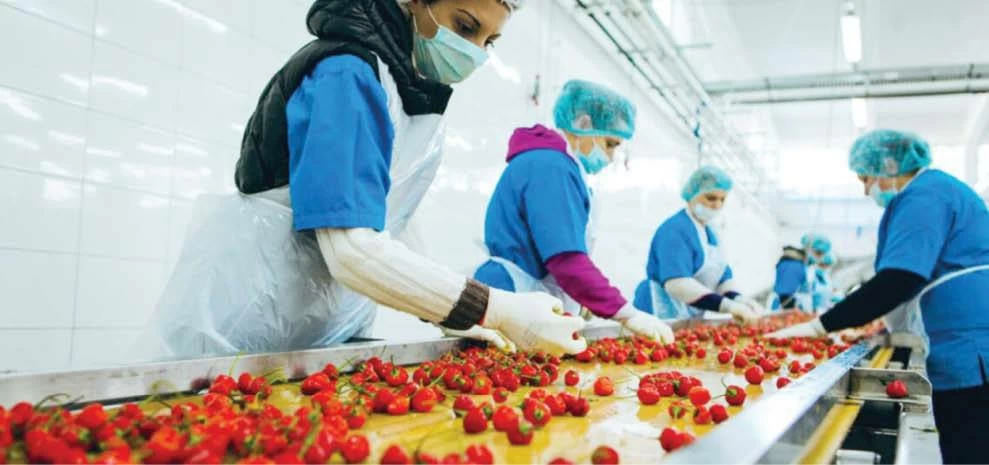
The Egyptian government's efforts to boost the food industry have yielded significant results, with the sector's exports reaching $6.9 billion in 2025, a 68.3% increase from 2021. According to a report by the Information and Decision Support Center, the food industry is a strategic sector in Egypt's economy, closely linked to the agricultural sector, supply chains, and logistics. The sector provides employment opportunities, increases exports, and enhances the economic value of agricultural products.
The food industry in Egypt comprises several key sectors, including dairy products, sugar, frozen vegetables and fruits, and edible oils. The sector has seen significant investment, with the number of companies established in the food industry increasing from 1,127 in 2019 to 1,530 in 2024, a growth rate of 35.8%. The capital invested in these companies has also increased, from 2.2 billion Egyptian pounds to 6.6 billion Egyptian pounds during the same period.
The growth in the food industry has contributed to Egypt's economic growth, with the sector accounting for 14% of the country's total non-oil exports in 2025. The industry has also created new job opportunities, with 15.4% of employees in the public and private sectors working in the food industry. The government has implemented several initiatives to support the sector, including the development of smart agriculture and modern irrigation systems.
The government has also invested in infrastructure development, including the construction of new silos to store grains. The number of silos has increased from 32 in 2014 to 87 in 2025, with a storage capacity of 3.8 million tons. This has helped to reduce food waste and improve the efficiency of the supply chain.
In addition to investing in infrastructure, the government has also implemented measures to ensure food safety and quality. The National Authority for Food Safety was established in 2017 to regulate the food industry and protect consumer health. The government has also launched initiatives to promote sustainable agriculture and reduce the environmental impact of the food industry.
The food industry's growth has also been driven by the government's efforts to promote exports. Egypt's food exports have been increasing, with the sector becoming the third-largest contributor to the country's non-oil exports. The government has also been working to improve the competitiveness of the food industry, with a focus on quality and safety.
Looking ahead, the food industry is expected to continue growing, driven by government support and investment in infrastructure. However, the sector also faces challenges, including the impact of climate change and the need to reduce food waste. The government will need to continue to invest in sustainable agriculture and food production to ensure the long-term viability of the sector.
Key points
- Egypt's food industry exports reach $6.9 billion in 2025, a 68.3% increase from 2021.
- The sector accounts for 14% of Egypt's total non-oil exports.
- The government has invested in infrastructure development, including the construction of new silos to store grains.