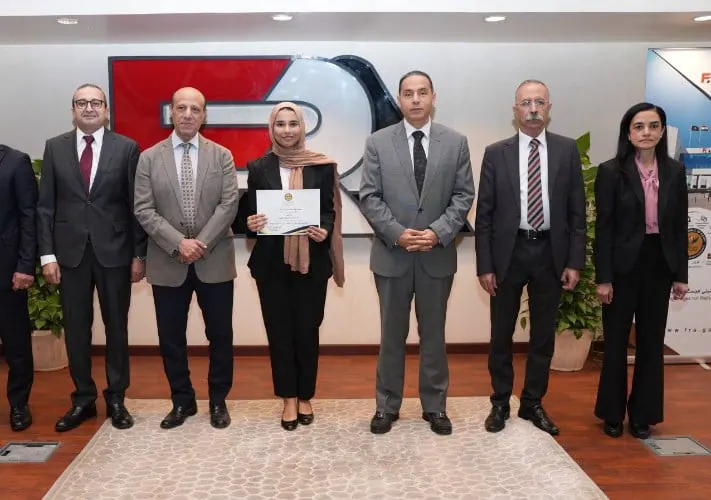
The Egyptian Financial Supervisory Authority (EFSA) has concluded its summer training program for university students, which attracted 7480 applicants, more than double the number from last year. The program aimed to promote financial culture and awareness, and provide students with hands-on experience in the non-banking financial sector. EFSA organized awareness lectures, which were attended by 441 trainees, followed by qualifying exams, and selected 228 trainees for a month-long practical training program.
The program was divided into three batches, each lasting a month, and provided students with the opportunity to work in various EFSA sectors. Dr. Islam Azzam, EFSA's chairman, attended the program's closing ceremony, where he expressed his satisfaction with the students' performance and commitment to acquiring knowledge and developing their skills. Azzam emphasized that investing in human capital and qualifying young cadres for the labor market is a key aspect of EFSA's efforts to develop the non-banking financial sector.
Azzam added that EFSA relies on young minds to increase innovation rates and develop financial products and services that meet the needs of market players. He highlighted the importance of combining theoretical knowledge with practical application, which is a key pillar of EFSA's financial awareness and education programs. The program aimed to build a new generation of young people capable of enriching the non-banking financial sector and leading it in the coming years.
Dr. Mohamed Abdel Aziz, EFSA's deputy chairman, stated that the program is part of EFSA's plans to promote financial literacy among university students. He added that the program helps to create a link between EFSA and students in their universities and communities, promoting the correct information about non-banking financial activities. Abdel Aziz emphasized that students are EFSA's ambassadors in their communities, helping to expand and deepen markets by attracting more citizens, especially young people, to investment paths supervised by EFSA.
The program targeted students from colleges and specializations related to economics and financial activities, including accounting, insurance, actuarial science, finance, computer science, information technology, media, public relations, and legal studies. Participants gained hands-on experience in EFSA's various sectors and learned about the latest developments in financial digitization and fintech applications. They also became familiar with the regulatory frameworks governing non-banking financial activities and the challenges they face.
The program allowed students to experience a full day of work at EFSA, training in departments related to their academic fields, and rotating between several departments, providing them with exposure to different areas of work and linking theoretical knowledge to practical applications. Participants expressed their appreciation for the program, which provided them with a comprehensive understanding of EFSA's roles and responsibilities, as well as the nature of work in the non-banking financial sector.
The summer training program is part of EFSA's efforts to develop the non-banking financial sector and promote financial awareness and literacy among young people. The program's success reflects EFSA's commitment to investing in human capital and promoting the development of the financial sector in Egypt. By providing students with practical experience and exposure to the non-banking financial sector, EFSA aims to build a more informed and skilled workforce that can contribute to the sector's growth and development.
Key points
- The program attracted 7480 applicants, with 228 students selected for the practical training program.
- The program aimed to promote financial culture and awareness among university students.
- The program provided students with hands-on experience in EFSA's various sectors and exposure to the latest developments in financial digitization and fintech applications.