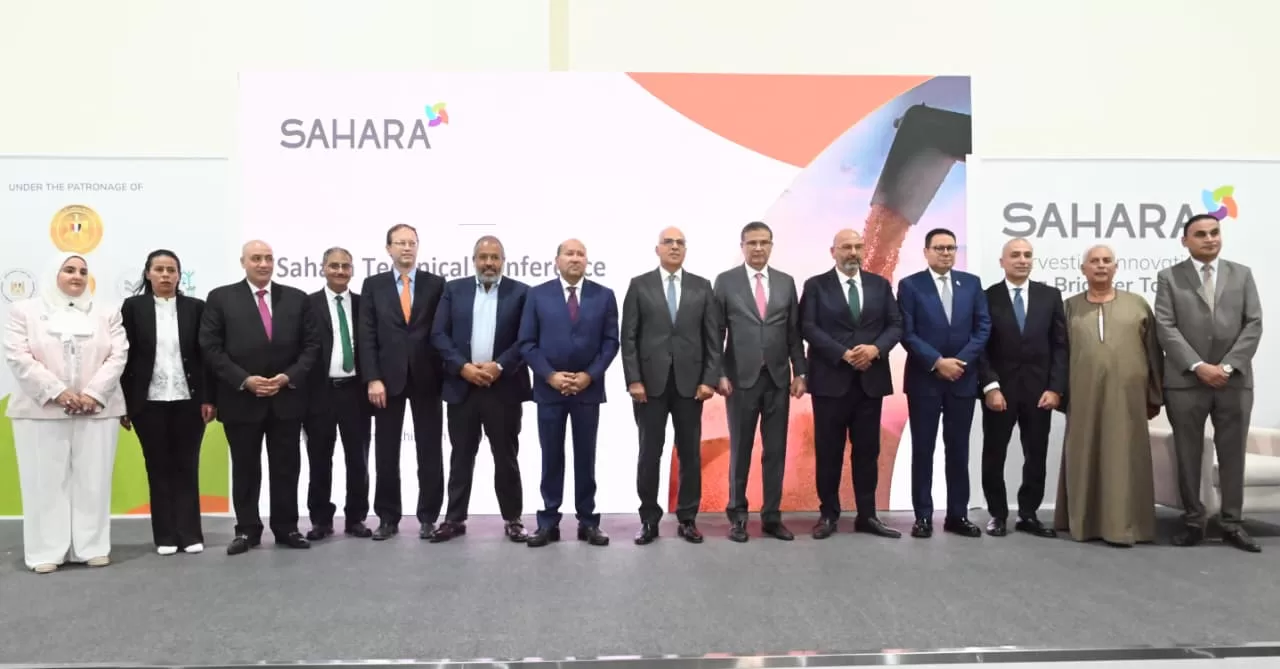
The 36th edition of the Sahara International Agriculture Exhibition has kicked off in Egypt, featuring around 550 global companies and a strong government presence. The event aims to support the agricultural sector and related industries, promote investment and export opportunities, and open up new markets for Egyptian products. Egyptian Minister of Agriculture and Land Reclamation, Alaa Farouk, and Minister of Water Resources and Irrigation, Hani Suwailam, were in attendance, along with several ambassadors, diplomatic representatives, and leaders from the agricultural sector.
During the opening ceremony, Mustafa Sharif Al-Gebaly, Deputy Chairman of the Egyptian Export Council for Chemical Industries and Fertilizers, delivered a speech highlighting the strengths of Egypt's fertilizer industry and its growth prospects. He emphasized the importance of the Sahara exhibition as a key platform for Egyptian companies to connect with global markets. Al-Gebaly noted that the exhibition has become a strategic partner and a vital window for opening up new markets and attracting international buyers, which will help boost Egyptian exports and increase the presence of national products in foreign markets.
Egypt's fertilizer industry is one of the country's most important strategic industries, with a history spanning nearly a century. The sector has the potential to continue expanding in the coming years, with domestic factories providing Egyptian farmers with various types of fertilizers needed for agricultural activities. These include phosphate, nitrogen, and potassium-based fertilizers, as well as specialized and compound fertilizers. This diversity in production makes the fertilizer industry a key partner in supporting the state's plans to achieve food security by providing local production requirements and reducing reliance on foreign markets.
The fertilizer industry is not only crucial for meeting domestic demand but also represents one of the main industrial and export sectors, with a growing base of international markets accepting Egyptian products. Al-Gebaly highlighted several indicators related to the sector, noting that fertilizers rank second among Egypt's largest export products, after gold. He also stated that fertilizer exports account for around 7% of Egypt's total non-oil exports, reflecting the industry's significant contribution to the country's export structure.
Egyptian fertilizers are exported to over 100 countries worldwide, demonstrating the wide reach of Egyptian products and the ability of companies in the sector to access multiple international markets. This extensive reach enhances Egypt's position as a major player in the global food security system, particularly given the role that fertilizers play in supporting agricultural production and increasing the productivity of agricultural land. The industry's growth and expansion are expected to have a positive impact on the country's economy and food security.
The Egyptian fertilizer industry is set to enter a new phase of investment expansion, with several major projects underway to increase production capacity and add value to Egyptian products. Five new projects are currently being implemented in the sector, with participation from investors and entities from both the local and international sectors. These projects are expected to attract foreign investment from countries such as China and India, in addition to national investors. The total value of investments targeted in these projects is estimated at around $3 billion.
The new investments will help drive growth and expansion in the Egyptian fertilizer industry, increasing production capacity and enhancing the sector's contribution to the country's economy. With a strong focus on export growth and market expansion, the industry is poised to play an increasingly important role in Egypt's economic development. Key players in the sector are optimistic about the future, citing the industry's strong fundamentals and growth potential.
Key points
- The Egyptian fertilizer industry is expected to receive $3 billion in new investments to boost production and exports.
- The industry is a key player in Egypt's economy, with fertilizer exports accounting for around 7% of the country's total non-oil exports.
- Egyptian fertilizers are exported to over 100 countries worldwide, demonstrating the wide reach of Egyptian products.