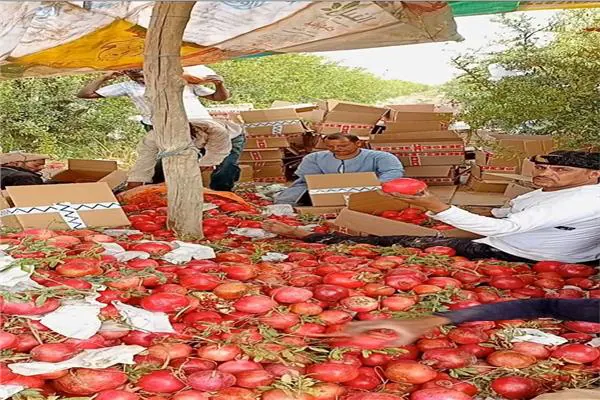
Egypt's desert pomegranate production has begun in the country's farms, with the "Desert 116" pomegranate variety being harvested in the farms of Wadi Al-Duba. The production process starts with planting in March and continues for five months on the trees, with harvesting taking place from August 1 to September 20 every year. The pomegranates are then sold to wholesalers and retailers.
The desert pomegranate is considered a promising crop in Egypt, with many farmers and producers involved in its cultivation. However, the crop faces several challenges, including marketing and export issues. According to farmers, the main challenge this year was the slowdown in export movement due to geopolitical developments in neighboring countries. As a result, producers had to direct their entire production to the local market.
Egyptian and Sudanese laborers work together in the farms, with many expressing their satisfaction with the quality of the crop this year. The laborers described the desert pomegranate as having a unique taste and high quality, making it a sought-after fruit. The collaboration between Egyptian and Sudanese workers was seen as a positive aspect of the production process.
The farm owners and managers expressed their pride in working with Sudanese workers, citing the importance of providing job opportunities and a decent income. They also emphasized their commitment to producing high-quality pomegranates and supplying them to local markets. The farm owners highlighted the challenges they face, including the need to improve marketing and export processes.
The Egyptian government has been working to support farmers and producers, with the Ministry of Agriculture and Land Reclamation playing a key role in promoting the country's agricultural sector. The government has implemented several initiatives aimed at increasing crop yields, improving marketing and export processes, and providing support to farmers.
The head of the Farmers' Syndicate, Hussein Abdel Rahman Abu Sadam, emphasized the importance of pomegranate cultivation in Egypt, citing its high economic returns. He noted that Egypt's pomegranate exports are still below expectations, reaching around 150,000 tons annually, and called for improvements in marketing and export processes. Abu Sadam also highlighted the need for better pest control and disease management.
Abu Sadam outlined four key demands for the Ministry of Agriculture and Land Reclamation to support the pomegranate sector. These demands include increasing agricultural extension services, developing agricultural processing, providing specialized pesticides, and streamlining export procedures. The implementation of these demands is expected to have a positive impact on the pomegranate sector and Egypt's agricultural industry as a whole.
Key points
- Egypt's desert pomegranate production faces marketing and export challenges despite its high quality and economic potential.
- The Egyptian government has been working to support farmers and producers through various initiatives.
- Improving marketing and export processes is crucial to increasing Egypt's pomegranate exports.