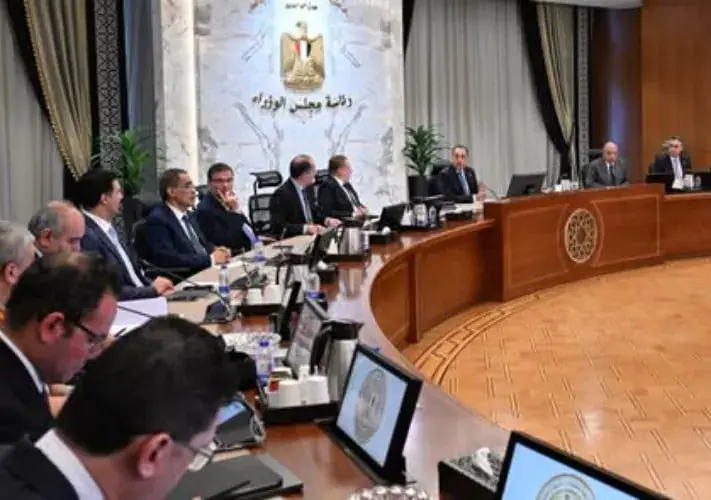
Egypt's Prime Minister Mostafa Madbouly chaired a meeting of the Central Crisis Management Committee at the government's headquarters in the new capital on August 5, 2024. The meeting was attended by key officials, including Hassan Abdullah, Governor of the Central Bank of Egypt, and ministers from various portfolios. The committee discussed the escalating geopolitical tensions in the region and their potential impact on Egypt's economy and markets.
The Prime Minister emphasized that the meeting aimed to review the government's preparedness to deal with potential escalation scenarios in the region. He highlighted the government's efforts to mitigate the effects of the crisis, including building strategic stockpiles of essential goods and implementing measures to rationalize government spending and consumption of fuel and energy. These efforts aim to ensure the continuity of economic activities and the availability of essential goods.
The Ministers of Finance and Planning, Ahmed Kujuk and Ahmed Rustom, presented a proposal to rationalize government spending. They stated that the plan aims to optimize the use of public resources in light of the rapidly evolving regional and global landscape. The proposal focuses on ensuring the continuity of economic and productive activities while maintaining financial allocations for essential goods and petroleum products.
The Minister of Supply and Internal Trade, Sherif Farouk, reviewed the efforts to increase the stockpile of strategic goods. He also discussed the progress of the initiative to reduce prices of basic goods and its impact on meeting citizens' needs across the country. The initiative currently includes 30 goods with discounts ranging from 15% to 25% compared to external market prices.
Minister Farouk assured that there is a strategic reserve of various goods that is sufficient for an average of six months. He added that some goods have reserves exceeding this period and that new contracts are being made to increase the stockpile. The minister presented data on the volume of reserves for various goods, demonstrating the government's preparedness to meet citizens' needs.
The meeting also discussed the government's efforts to enhance the availability of essential goods and petroleum products. The Minister of Petroleum and Mineral Resources, Karim Badawi, and the Minister of Agriculture and Land Reclamation, Alaa El-Din Farouk, participated in the discussions, highlighting their respective sectors' roles in maintaining the stability of supplies.
The committee's discussions reflect the government's proactive approach to managing the potential impacts of regional tensions on Egypt's economy. By building strategic reserves, rationalizing spending, and enhancing the availability of essential goods, the government aims to mitigate the effects of the crisis and ensure economic stability.
Key points
- The Egyptian government is taking proactive measures to manage the potential impacts of regional tensions on the economy.
- A strategic reserve of essential goods has been built, sufficient for an average of six months.
- The government is implementing measures to rationalize government spending and consumption of fuel and energy.