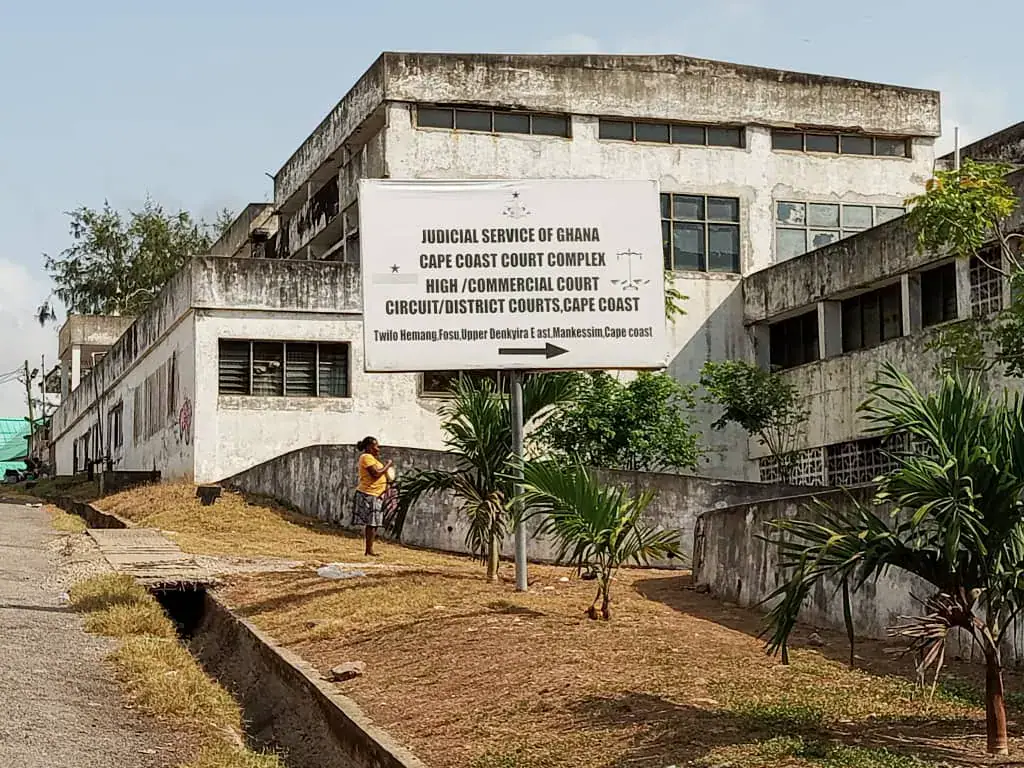
The Cape Coast Court Complex was eerily silent on Monday, November 2, as the nationwide strike by the Judicial Service Staff Association of Ghana (JUSAG) brought judicial activities in the Central Regional capital to a standstill. The Ghana News Agency (GNA) visited the facility at about 0800 hours and observed that the three main entrances to the court complex were locked with red bands tied across the gates. Some security personnel were seen hovering within the premises, apparently to prevent unauthorised entry into the building.
The strike, declared by JUSAG effective Monday, November 2, was prompted by the government's failure to approve the Judicial Council's recommendations on the 2026 salary review for Judicial Service staff. JUSAG had demanded approval of the recommendations by the end of October and payment of the revised salaries in November, together with arrears covering January to October 2026. The Association argued that the delay followed months of engagements since December 2025.
The industrial action has affected court operations across the country, with several courts, including superior courts and lower courts, forced to close or restrict public access. At the Cape Coast Court Complex, the closure left some litigants and members of the public stranded outside the complex, uncertain about when their matters would be heard. A 75-year-old man, who had travelled from Dunkwa-on-Offin for a chieftaincy case, was among those affected.
The elderly man told the GNA that although he had heard announcements about the impending strike, he was uncertain about it. He appealed to the government and JUSAG to resolve their differences quickly to prevent innocent citizens from suffering the consequences of the impasse. The strike also affected traders, particularly egg sellers and other vendors who usually depend on the daily human traffic around the court complex for their livelihood.
Some of the traders expressed disappointment that the closure would deprive them of their customers. They called for an early resolution of the disagreement between JUSAG and the government, saying the prolonged closure of the courts would worsen their economic hardships. The traders' concerns were shared by some of the affected litigants, who appealed to the government to prioritise the welfare and conditions of service of judicial staff.
The strike has significant implications for the administration of justice in Ghana, with many cases adjourned or postponed indefinitely. The Ghana News Agency observed that the usual bustle associated with a working court day was conspicuously absent, with lawyers, litigants, and clerks unable to access the court complex. The situation has left many stakeholders, including litigants, lawyers, and traders, uncertain about the future.
As the strike continues, stakeholders are eagerly awaiting a resolution to the impasse between JUSAG and the government. The outcome of the negotiations will have a significant impact on the judicial service and the administration of justice in Ghana. Key to resolving the issue is the government's response to JUSAG's demands, particularly regarding the 2026 salary review and arrears.
Key points
- The nationwide strike by JUSAG has brought judicial activities to a standstill in Cape Coast and other parts of Ghana.
- The strike was prompted by the government's failure to approve the Judicial Council's recommendations on the 2026 salary review for Judicial Service staff.
- The industrial action has significant implications for the administration of justice in Ghana, with many cases adjourned or postponed indefinitely.