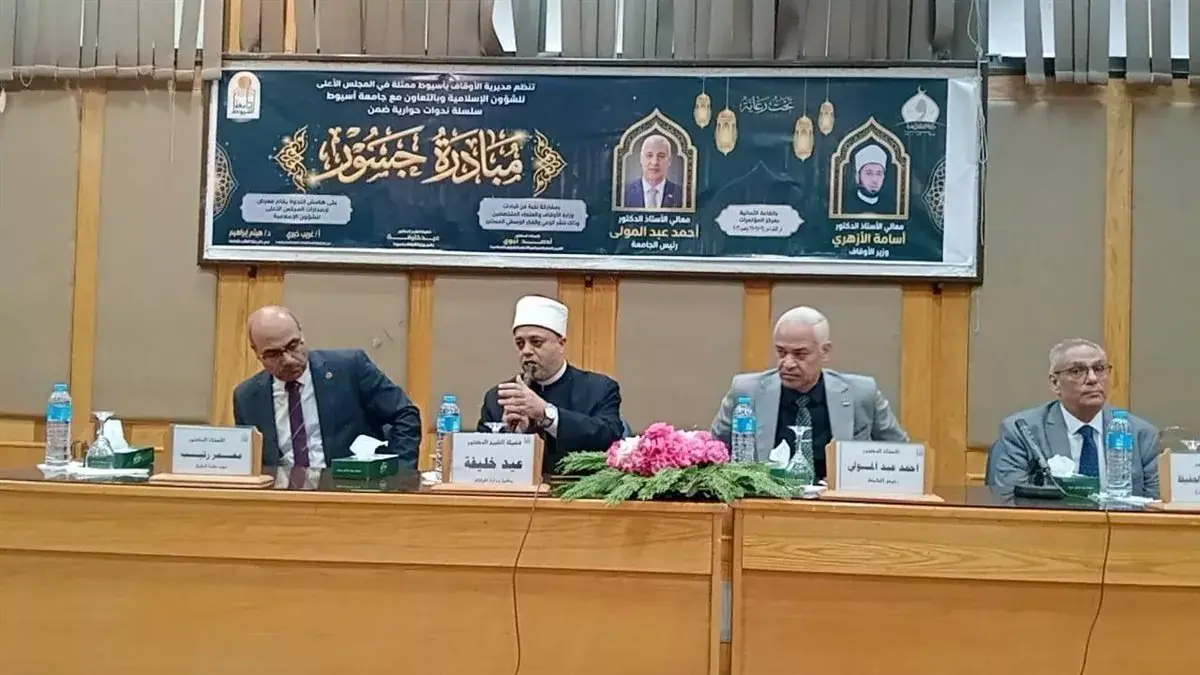
The Higher Council for Islamic Affairs, in collaboration with Assiut University and the Assiut Awqaf Directorate, organized a dialogue titled "Does Law Conflict with Islamic Law?" for students from the faculties of Commerce and Law. The event, part of the "Bridges" initiative, aimed to correct common misconceptions about the relationship between religion and societal regulations. It was held under the auspices of Dr. Osama Al-Azhari, the Minister of Awqaf and head of the Higher Council for Islamic Affairs.
The dialogue, attended by Dr. Ahmed Abd al-Mouli, President of Assiut University, and Dr. Eid Ali Khalifa, Director of the Assiut Awqaf Directorate, began with the national anthem and a Quranic recitation. The opening session featured discussions on the importance of integrating religious and legal awareness among young generations. The event also included an exhibition of publications by the Higher Council for Islamic Affairs, which was praised by the university president for its intellectual content.
Dr. Al-Badri Sayyid Mustafa, a lecturer in Islamic jurisprudence at Al-Azhar University's Assiut branch, addressed the first topic of the dialogue. He emphasized that Islamic law and state legislation share common goals, including preserving the five necessities: religion, life, intellect, wealth, and honor. He cited a Quranic verse that enjoins justice, compassion, and obedience to legitimate authority.
Dr. Osama Awad Abdullah, an Imam and preacher with the Assiut Awqaf Directorate, tackled the popular question of whether to apply law or Islamic law. He argued that adhering to laws regulating public affairs is a religious duty, as long as they do not conflict with Islamic principles. He based his argument on Quranic verses and prophetic traditions that emphasize obedience to authority and the prevention of harm.
The dialogue concluded with an open discussion where the speakers addressed students' inquiries about the differences between Islamic law, jurisprudential interpretations, and legal legislation. Both speakers stressed that societal stability relies on the integration of religious and legal awareness among young people. The event aimed to promote a comprehensive understanding of the relationship between Islamic law and state legislation.
The Higher Council for Islamic Affairs' initiative seeks to foster a nuanced understanding of Islamic law and its relationship with societal regulations. By engaging with students from various faculties, the council aims to promote a culture of dialogue and mutual understanding. The event in Assiut University is part of a broader effort to correct misconceptions and build bridges between different perspectives.
The collaboration between Al-Azhar's Higher Council for Islamic Affairs, Assiut University, and the Assiut Awqaf Directorate reflects a broader effort to promote interfaith dialogue and understanding. The event demonstrated the importance of engaging with young people and addressing their concerns about the relationship between Islamic law and state legislation.
Key points
- The dialogue aimed to correct common misconceptions about the relationship between Islamic law and state legislation.
- The event was part of the "Bridges" initiative to promote a comprehensive understanding of Islamic law and societal regulations.
- The speakers emphasized that societal stability relies on the integration of religious and legal awareness among young people.