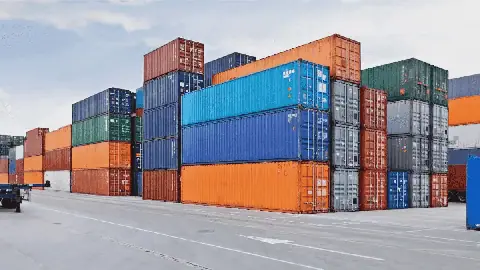
Drive along Kenya's Mombasa Road at night and the highway tells a story of its own. Trucks carrying containers nose to tail, each one destined for a specific location, are a common sight. These containers, which hold spare parts, hardware, or medicines, have traveled from a ship that docked a day or two earlier. The journey from ship to shelf is a complex one, involving multiple handovers, and its success depends on the efficiency of each link in the chain. In 2025, 1,955 ships called at the Port of Mombasa, handling 2.11 million 20-foot containers, a 5.5% increase from the previous year.
The journey begins with a timetable, as container liner services sail on published schedules. Once a ship berths, the container is discharged, documents are lodged, duties settled, and the container is released. Terminal staff, customs officers, port workers, and agents all handle the same shipment within hours. To streamline this process, DP World launched a Port Community System in Kenya in late 2025, bringing shipping lines, agents, and cargo owners onto one platform to reduce paperwork delays. This system aims to improve communication and efficiency among all parties involved.
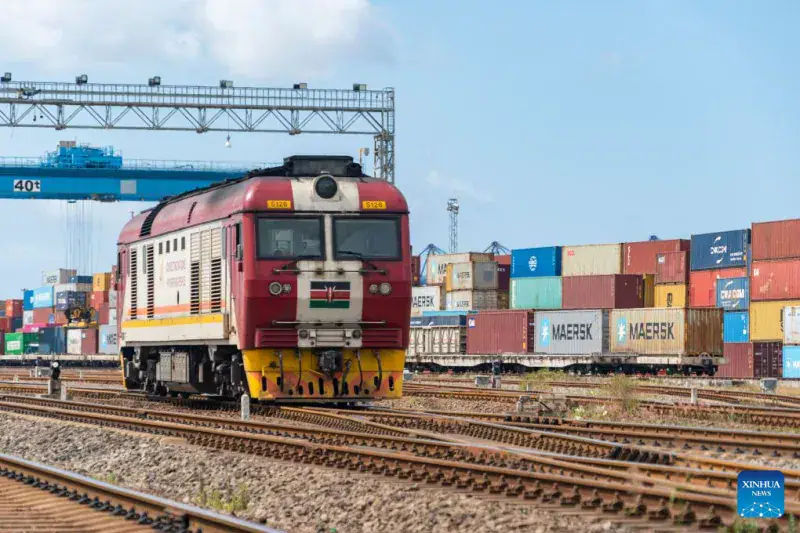
From Mombasa, containers move by road or on the Standard Gauge Railway (SGR) to inland container depots in Nairobi and Naivasha. According to a report from August 2026, one SGR trip carrying 54 containers takes 54 trucks off the road. However, rail does not replace the road entirely, as every container at a depot still requires a truck, driver, and loading team. The distance from Mombasa to Kampala is approximately 1,170 kilometers by road, and in the first half of 2026, trucks averaged 118 hours, or nearly five days, from the port, against a target of 70 hours.
Cargo bound for other countries through Kenya's ports increased by 19.5% in 2025 to a record 15.88 million tonnes, serving Uganda, the Democratic Republic of Congo, Rwanda, and Tanzania. For truck drivers like Hezbon, who drives on the Mombasa to Kampala route, timely cargo delivery is crucial. "When the cargo is ready on time, I load, I drive and I get paid. When it is delayed, everything waits: the truck, the money and my family at home," he said. The efficient movement of goods has a direct impact on the livelihoods of drivers and their families.
At the end of the journey is a business, such as a garage or pharmacy, that relies on the timely arrival of goods. A garage that receives its parts on time can keep customers' vehicles on the road, while a pharmacy that receives its stock as scheduled can serve patients without gaps in its inventory. Reliable arrivals enable businesses to hold less stock, tie up less cash, and serve customers with confidence. For Wanjiku, owner of a motor spares business in downtown Nairobi, the timely arrival of containers is essential. "My customers do not care how the spare parts reached me. They care that the part is there when they come. When the container arrives on the day I was told, I can promise a repair date and keep my word," she said.
Despite the importance of the shipping industry, it faces pressure points, such as congestion at Mombasa, which lingered into early 2026. The Kenya Ports Authority (KPA) and the Kenya Revenue Authority are working together to ease congestion. Capacity is being increased, with KPA refurbishing one ship berth and planning two more, which will add room for 1.4 million more 20-foot containers. Additionally, Lamu offers a second gateway, handling 799,161 tonnes in 2025, up from 74,380 the year before. The Kenya Ships Agents Association says that finishing road and rail links will make Lamu more attractive to cargo owners.
The shipping industry depends on people, and the next generation is training close to the docks. The Bandari Maritime Academy in Mombasa teaches various skills, including nautical science, marine engineering, and maritime transport. In October 2026, it extended its maritime awareness campaign to young people learning technical and vocational skills in the counties. "The blue economy is not just about the sea but about the myriads of opportunities that lie within it, and our youth must be equipped with the skills and knowledge to harness these opportunities and drive economic growth transformation," said Enock Okwema, Deputy Director, Maritime Transport and Operations Training at the Academy.
Key points
- The efficient movement of goods from ship to shelf depends on the smooth operation of multiple handovers and the cooperation of shipping lines, ports, government agencies, and inland transport.
- The shipping industry faces pressure points, such as congestion, but is working to increase capacity and improve efficiency.
- The next generation of shipping professionals is being trained at institutions like the Bandari Maritime Academy in Mombasa.
Reporting sources
- From ship to shelf: The people who keep Kenya’s goods moving · 98.4 Capital FM