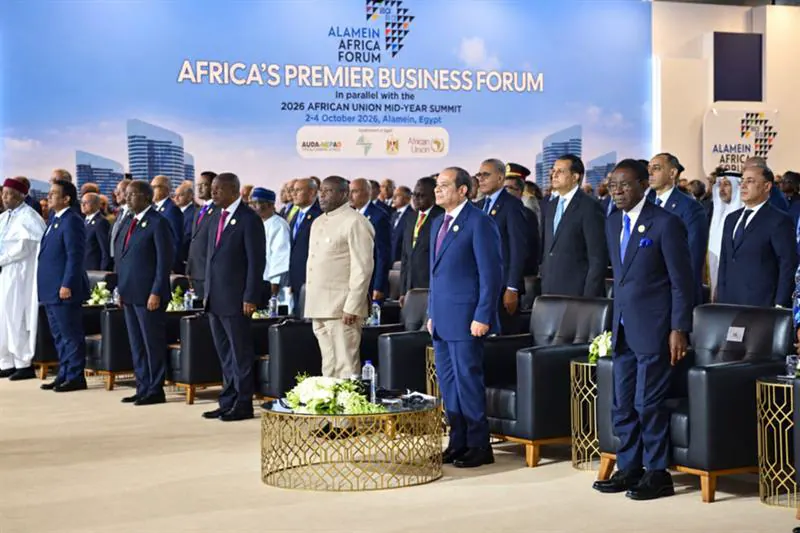
The city of Al-Alamein in Egypt played host to a series of significant African events from October 2 to 4. These events, which included the Alamein-Africa Business Forum, the Summit of NEPAD founding countries, and the 8th Mid-Year Coordination Meeting between the African Union and regional economic communities, brought together high-ranking officials, diplomats, and business leaders. The events aimed to promote economic integration and cooperation across the continent.
Egyptian President Abdel-Fattah Sissi inaugurated the Alamein-Africa Business Forum, emphasizing the need for countries to enhance their resilience and build their own futures amid global crises and rapid changes. The forum featured over 30 thematic sessions, attracting nearly 1,500 business leaders, investors, and decision-makers. Discussions focused on intra-African trade, investment, financing, and projects, with a special emphasis on youth start-ups and small and medium-sized enterprises.
The choice of Al-Alamein city as the venue for these events was strategic, according to Ramy Zohdy, a specialist in African affairs. The city, which has been transformed from a war-torn area to a model of urban planning and post-conflict reconstruction, offers a powerful example of Egyptian urban development. Zohdy noted that the events marked the first time all three gatherings had taken place in a single African country over just four days.
The Alamein-Africa Business Forum concluded with the signing of dozens of agreements and partnership protocols, as well as the announcement of the forum's periodic organization every two years. The African Union, NEPAD, and the African Export-Import Bank will participate in the forum. The events also provided a platform for bilateral and multilateral meetings, aiming to address one of the major obstacles to African integration: the deficit of communication and information between markets.
The Summit of NEPAD founding countries, held on October 3, resulted in the "Al-Alamein Declaration," which called for sustainable internal financing mechanisms to address funding gaps. The declaration emphasized the need for African financing, a stronger private sector role, and the transformation of African institutions to increase their project preparation, resource mobilization, and implementation capacities.
The 8th Mid-Year Coordination Meeting of the African Union, held on October 4, brought together the AU, regional economic communities, and regional mechanisms to discuss continental issues. The meeting focused on implementing the African Continental Free Trade Area and the theme of water, which is the AU's central theme for 2026.
The events highlighted a significant paradox in African economies: despite the private sector generating over 70% of the continent's GDP, intra-African trade remains stagnant at around 18%. President Sissi stressed the need to address this paradox, noting that over 85% of African private sector transactions occur with external companies, and more than 50% of small and medium-sized enterprises lack sufficient information on opportunities offered by the African market.
Key points
- The events in Al-Alamein city aimed to promote economic integration and cooperation across Africa.
- The Alamein-Africa Business Forum resulted in the signing of dozens of agreements and partnership protocols.
- The events highlighted the need to address the paradox of African economies, where intra-African trade remains low despite a strong private sector.