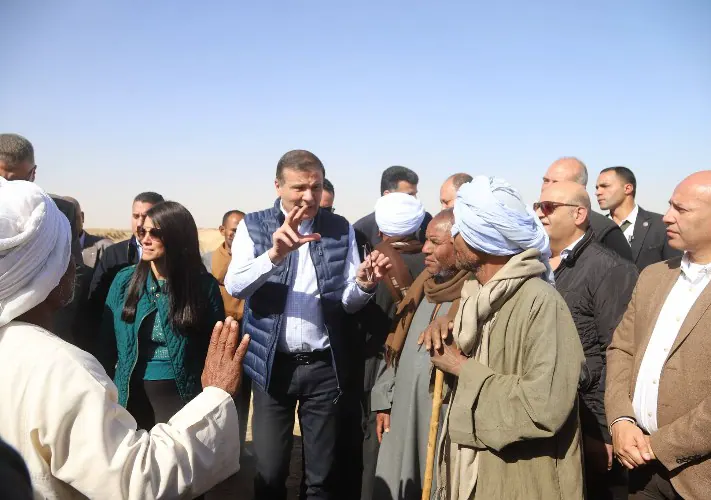
Egypt's Ministry of Agriculture and Land Reclamation has issued 624 operation licenses for various animal, poultry, and feed projects, as well as milk collection centers, during the first half of September. The licenses included 181 permits for small-scale livestock breeders, in coordination with the General Authority for Veterinary Services. This aims to regulate the activity and raise bio-security levels, reducing risks. The move aligns with directives from Agriculture Minister Alaa Farouk to facilitate procedures for investors and small breeders.
According to a report received by Minister Farouk from Dr. Tarek Suleiman, head of the Animal and Poultry Wealth Development Sector, the efforts aim to implement the minister's directives and support state efforts to achieve food security and enhance Egyptian product competitiveness. The sector has been working to overcome obstacles for investors and small breeders, developing work mechanisms to quickly respond to sector needs. The report highlighted the importance of these licenses in promoting the growth of the animal and poultry industry.
The Animal and Poultry Wealth Development Sector approved 427 registrations for feed mixtures, additives, and concentrates, including 270 local and 157 imported registrations, in collaboration with the Regional Center for Food and Feed and the Animal Production Research Institute. This aims to improve production efficiency, reduce waste, and enhance breeding economics. The sector emphasized that strict registration and inspection procedures are crucial in achieving these goals.
During the same period, the sector granted five technical approvals for new animal and poultry production projects in desert areas, adhering to bio-security requirements. This allows for organized expansion outside residential areas. Additionally, the sector provided technical support and conducted homogeneity experiments for 19 feed factories with 45 production lines for poultry, livestock, and fish, in preparation for operating licenses. These efforts aim to promote the development of the animal and poultry industry.
The sector continues to conduct intensive and surprise inspection campaigns, in coordination with regulatory authorities, on feed factories, warehouses, and stores in several governorates. This ensures that feed is traded in compliance with specifications and prevents monopolistic practices or attempts to hide goods. The sector takes legal action against violators, emphasizing its commitment to maintaining the integrity of the feed supply chain.
The sector organized six awareness and training workshops in several governorates, focusing on best practices in feeding and caring for herds, improving productivity, and reducing breeding costs. These workshops aimed to transfer practical knowledge to small breeders, enhancing their capabilities and promoting sustainable agricultural practices. The sector's efforts aim to support small-scale farmers and improve the overall efficiency of the animal and poultry industry.
The sector also approved the export of quantities of fish feed, feed additives, frozen poultry and its products, and table eggs to various Arab and foreign markets. This reflects the connection between developing local production and the ability to compete externally, adhering to the highest quality and safety requirements. The exports demonstrate Egypt's growing presence in the global market, driven by the sector's efforts to enhance production and competitiveness.
Key points
- The Egyptian Ministry of Agriculture issued 624 operation licenses for animal, poultry, and feed projects during the first half of September.
- The licenses aim to regulate activities, raise bio-security levels, and reduce risks in the animal and poultry industry.
- The sector continues to conduct inspection campaigns and provide technical support to promote sustainable agricultural practices and enhance industry competitiveness.