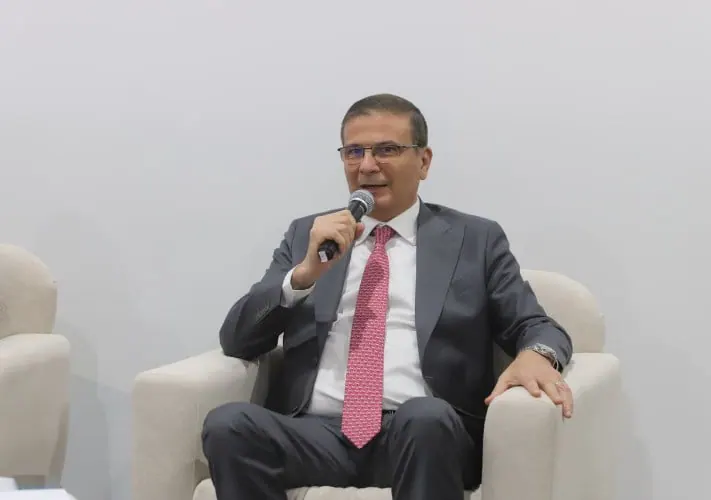
Egyptian Minister of Agriculture, Alaa Farouk, has stated that the country's agricultural strategy, within the framework of Egypt's 2030 vision, aims to achieve food security through several integrated approaches. These include horizontal expansion by increasing agricultural areas and vertical expansion by improving productivity. The strategy also focuses on developing livestock, poultry, and fish wealth, increasing the competitiveness of agricultural exports, and modernizing agricultural extension services.
During a discussion session at the Sahari 2026 exhibition, Farouk revealed that Egypt's total cultivated area currently stands at approximately 10.5 million feddans. This comprises 6.1 million feddans of old land and 4.4 million feddans of new land. The total cultivated area translates to a crop area of around 17.5 million feddans. This significant expansion is part of the government's efforts to boost agricultural production and ensure food security.
The Egyptian government has made substantial progress in land reclamation, with over 4.5 million feddans already reclaimed in areas such as the New Delta, Toshka, East Owainat, and Sinai. Minister Farouk emphasized the government's commitment to supporting these projects by providing necessary production inputs, including fertilizers, seeds, and expert advice. Additionally, the government has conducted studies and soil classification for around 8.8 million feddans of land.
To further enhance agricultural productivity, the government has established modern mechanization stations and contributed to the transfer of treated agricultural drainage water within the New Delta project. These initiatives aim to optimize resource utilization, increase crop yields, and promote sustainable agricultural practices. By investing in these areas, the government seeks to improve the overall efficiency and competitiveness of Egypt's agricultural sector.
The Ministry of Agriculture is working closely with other stakeholders, including the Ministry of Water Resources and Irrigation, to ensure the effective implementation of these initiatives. According to Dr. Hani Suwailm, Minister of Water Resources and Irrigation, the government's efforts to promote sustainable agriculture and water management practices are crucial for achieving long-term food security and environmental sustainability.
Egypt's agricultural sector plays a vital role in the country's economy, and the government's initiatives aim to enhance the sector's productivity, competitiveness, and sustainability. By increasing cultivated areas, improving productivity, and promoting modern agricultural practices, the government seeks to ensure a stable food supply and support the country's economic growth.
The government's focus on agricultural development is also expected to have a positive impact on rural communities, where agriculture is a significant source of employment and income. By supporting small-scale farmers and promoting agricultural development in rural areas, the government aims to improve living standards, reduce poverty, and promote social stability.
Key points
- The Egyptian government has set a target to increase the cultivated area to 10.5 million feddans as part of its strategy to achieve food security by 2030.
- The government has reclaimed over 4.5 million feddans of land in areas such as the New Delta, Toshka, East Owainat, and Sinai.
- The Ministry of Agriculture is working to promote modern agricultural practices, improve productivity, and increase the competitiveness of Egyptian agricultural exports.