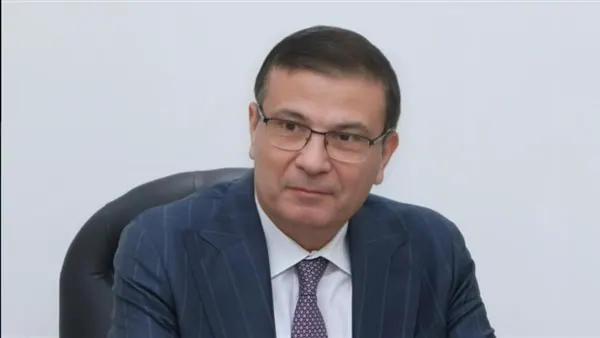
Egyptian Minister of Agriculture and Land Reclamation, Elsayed Farouk, outlined the ministry's strategy for achieving food security and sustainable agricultural development at a recent seminar organized by the Cairo Rotary Club. The strategy focuses on horizontal and vertical expansion, development of livestock and poultry, and increasing the competitiveness of agricultural exports.
The total cultivated area in Egypt currently stands at approximately 10.5 million feddans, comprising 6.1 million feddans of old land and 4.4 million feddans of new land. The ministry continues to provide technical support to major national projects, including the New Delta, Toshka, East Owainat, and Sinai, in collaboration with the Future of Egypt for Sustainable Development device.
In terms of vertical expansion, the ministry is working to apply recommended agricultural practices for water use to increase productivity. Additionally, efforts are being made to update the field irrigation system and complete national projects to develop irrigation systems in coordination with the Ministry of Water Resources and Irrigation.
The ministry is also working to develop new, climate-resilient crop varieties and enhance partnerships with the private sector to produce vegetable and potato seeds, reducing reliance on imports. Furthermore, the ministry is strengthening oversight of the fertilizer and pesticide market, linking fertilizer distribution to the Farmer's Card, and launching a national land registry system to document agricultural land and prevent encroachments.
Minister Farouk highlighted the significant achievements in Egypt's agricultural exports, which exceeded 9.5 million tons of fresh produce in 2025. The total value of Egypt's agricultural exports, including processed products, reached approximately $11.5 billion during the same year. These accomplishments align with the ministry's efforts to develop agricultural extension services and digital transformation to support farmers.
The minister also discussed the importance of the presidential initiative "Hayat Karima" (Decent Life) in developing rural areas and improving the living standards of citizens. The Ministry of Agriculture is contributing to this initiative to enhance the quality of life for farmers. Moreover, the ministry is participating in the "100 Million Trees" initiative, a seven-year project launched in 2022 to support green transformation and mitigate the effects of climate change.
The "100 Million Trees" initiative aims to achieve a sustainable economic return by expanding the cultivation of fruit and wood trees. The project is currently in its fifth phase, and it has already led to the establishment of 23 tree forests in 12 governorates. These forests serve as a model for environmental and economic sustainability, utilizing treated wastewater to produce high-quality wood products.
Key points
- Egypt's agricultural exports reached $11.5 billion in 2025.
- The country aims to increase its agricultural production while mitigating the effects of climate change.
- The Ministry of Agriculture is working to enhance food security and sustainable development through various initiatives and partnerships.