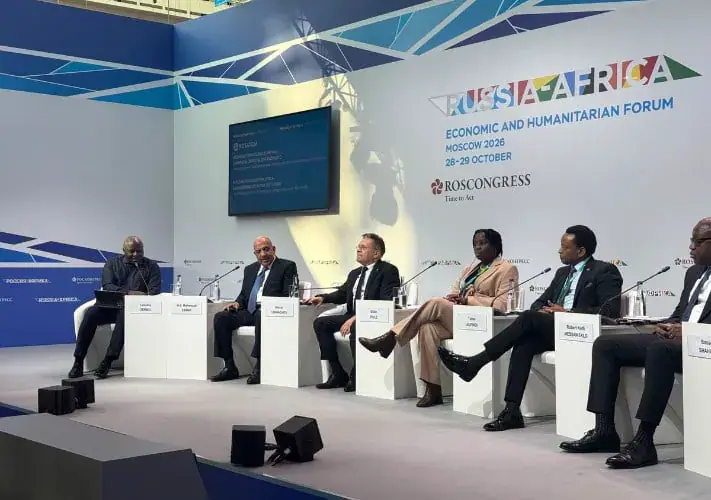
Egyptian and Russian officials, along with nuclear energy experts, convened at the 3rd Russia-Africa Summit to explore opportunities for developing nuclear technology in Africa. The session, titled "Nuclear Technologies in Africa: Building Momentum for the Future," was organized with the support of Russia's state-owned Rosatom and moderated by Lasina Zerbo, Chair of the Rwandan Atomic Energy Commission. The discussion focused on enhancing cooperation in human resource training and utilizing floating nuclear power units.
The session featured prominent speakers, including Rosatom's Director General, Alexei Likhachev, Togo's Minister of Mines and Energy, Robert Kovei Missan Eklo, and Egypt's Minister of Electricity and Renewable Energy, Mahmoud Esmat. Participants examined the necessary steps to establish a nuclear industry in African countries, leveraging local expertise and resources. They also addressed challenges associated with implementing nuclear projects and the role of nuclear technology in securing electricity supplies.
Likhachev highlighted Rosatom's activities in 29 African countries, emphasizing growing interest in nuclear energy as a long-term solution for development and stable electricity supply. He noted the potential of floating nuclear power units, citing the first export agreement with Indonesia and increasing interest from African nations. Likhachev stressed that nuclear technology can enable African countries to build technological capacity, prioritize development, and develop advanced industries.
Zerbo emphasized the importance of gradual implementation of nuclear energy programs, starting with training engineers, technicians, and organizational staff. He also underscored the need to foster public trust in nuclear projects and utilize guidelines from the International Atomic Energy Agency. Zerbo suggested that cooperation among African countries through regional power grids, shared training centers, and regulatory coordination can accelerate project implementation.
Rosatom has allocated around 1000 scholarships for African students in Russian universities, focusing on nuclear and related fields. Currently, approximately 370 African students from 26 countries study in Russia under Rosatom's programs, with over 100 new students expected from 17 countries in the upcoming academic year. Rosatom's activities in Africa extend beyond nuclear energy projects to include renewable energy solutions and material development.
Rosatom's cooperation with African countries aims to support energy security and technological development through long-term partnerships. The organization's efforts encompass educational initiatives, logistical services, and material development projects. By fostering cooperation and knowledge transfer, Rosatom seeks to contribute to Africa's sustainable development and energy independence.
The discussions at the Russia-Africa Summit highlighted the potential for nuclear technology to drive economic growth, improve living standards, and enhance energy security in African countries. As the continent continues to explore nuclear energy options, collaboration between governments, international organizations, and industry stakeholders will be crucial in harnessing the benefits of nuclear technology while ensuring safety and sustainability.
Key points
- Rosatom's activities in 29 African countries focus on nuclear energy, renewable energy solutions, and material development.
- The organization has allocated 1000 scholarships for African students in Russian universities to study nuclear and related fields.
- Cooperation among African countries and international organizations is essential for harnessing the benefits of nuclear technology while ensuring safety and sustainability.