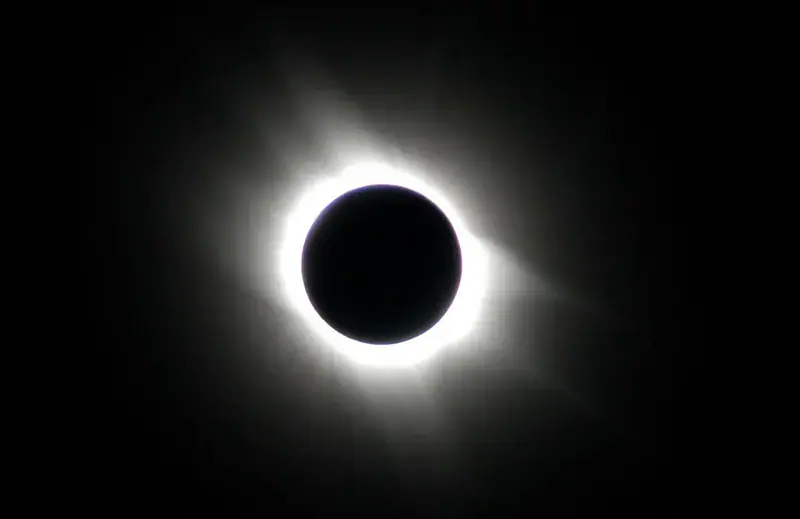
The National Research Institute of Astronomy and Geophysics (NRIAG) in Egypt has opened registration for observation programs ahead of the total solar eclipse on August 2, 2027. The programs are aimed at international visitors, researchers, and astronomy enthusiasts who want to observe the eclipse from locations along its path across Egypt. Registration is currently available for Luxor and Qena, with Nag Hammadi expected to be added later.
The observation programs offer various packages, with prices starting at $500 per person at Luxor Library, excluding accommodation. At Qena University, prices range from $1,000 per person, including one night's accommodation, to $2,000 for a two-night package. The packages do not include transportation or the costs of bringing observation equipment into the country. However, NRIAG will provide official documentation to assist visitors with customs procedures for their equipment.
The totality phase of the eclipse is expected to last approximately six minutes and 22 seconds at Luxor Library and six minutes and eight seconds at Qena University. The institute has identified seven potential observation sites across Egypt, with registration currently available for two locations. The programs are expected to attract international visitors, researchers, and astronomy enthusiasts.
In addition to the observation programs, NRIAG is organizing an international scientific conference on solar physics and space weather, scheduled for August 3-5, 2027. The conference will cover topics including the solar corona, solar wind, magnetic activity, and space-weather forecasting. Part of the program will take place aboard the Queen of Sheba Nile cruise, which is scheduled to travel between Luxor and Aswan from August 2 to 6.
With less than a year to go before the event, Egypt's preparations are continuing across several locations, involving scientific institutions, tourism companies, and international astronomy organizations. The programs are expected to boost tourism and promote scientific research in the country. Registration is open until June 30, 2027, subject to availability.
The observation programs will provide a unique opportunity for visitors to witness the total solar eclipse from locations along its path across Egypt. The event is expected to attract a large number of international visitors, researchers, and astronomy enthusiasts. The programs will also promote scientific research and education in the field of astronomy.
Egypt's National Research Institute of Astronomy and Geophysics is leading the preparations for the 2027 total solar eclipse observation programs. The institute is working with various scientific institutions, tourism companies, and international astronomy organizations to ensure the success of the event. The programs are expected to have a positive impact on the country's tourism industry and scientific research community.
Key points
- Registration is open until June 30, 2027, for the 2027 total solar eclipse observation programs in Luxor and Qena.
Reporting sources
- Egypt Opens Registration for 2027 Total Solar Eclipse Observation · Egyptian Streets