The Egyptian government has initiated a comprehensive project to address the long-standing issue of pollution in the Nile Delta region. The project, which focuses on improving the quality of water in the Kitchener Drain, is one of the largest environmental and developmental projects in the country. It aims to transform the reality of three provinces: Dakahlia, Gharbiya, and Kafr El Sheikh. The project involves the construction of modern waste management facilities and the rehabilitation of existing infrastructure.
The project is being implemented in line with presidential directives to take concrete actions on the ground to address environmental challenges. The government has made significant progress, including the signing of a major financing contract worth €148 million with the European Bank for Reconstruction and Development (EBRD). The agreement was signed by Prime Minister Mostafa Madbouli and EBRD President Suma Chakrabarti. This project is expected to have a significant impact on the environment and the lives of citizens in the region.
The Kitchener Drain project is a critical component of Egypt's efforts to improve environmental management and reduce pollution. The drain, which is 69 kilometers long, connects three provinces and empties into the Mediterranean Sea. It was originally built by British forces in 1893 during the British occupation of Egypt. The project aims to improve the quality of the environment, reduce pollution, and enhance the efficiency of waste management in the provinces along the drain.
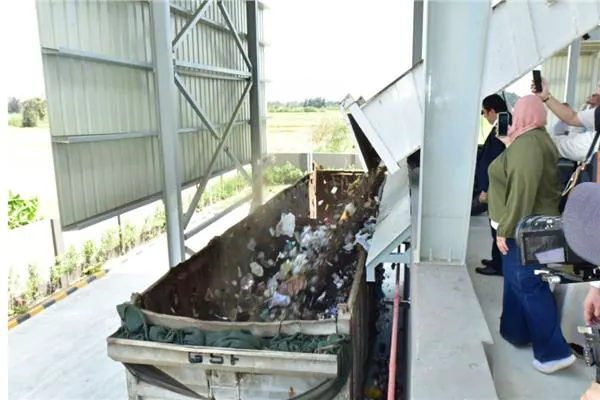
The project involves several key components, including the construction of five waste recycling plants and two intermediate transfer stations. The project also includes the rehabilitation and closure of the Qalabashu dump in Dakahlia province, as well as the development of garages and mechanical equipment in the three provinces. The project is being implemented by the Ministry of Local Development and Environment, in cooperation with the EBRD and a grant from the European Union.
The Egyptian government has secured significant funding for the project, including a €213.9 million loan from the European Investment Bank (EIB) and a €148 million loan from the EBRD. The total cost of the project is estimated at €408.05 million. The project is expected to be completed by 2027, with several key milestones already achieved, including the completion of studies and designs, and the restructuring of the project management.
The project was launched with the opening of two intermediate transfer stations in Nabroh, Dakahlia province, and Neshil, Gharbiya province. The stations were inaugurated by Minister of Local Development and Environment, Dr. Manal Awad, and Dakahlia Governor, Brigadier General Tariq Margou. The project is expected to have a significant impact on the environment and the lives of citizens in the region, improving waste management and reducing pollution.
The Kitchener Drain project is a critical step towards achieving Egypt's environmental goals and improving the quality of life for citizens in the Nile Delta region. The project demonstrates the government's commitment to environmental sustainability and its efforts to address the challenges facing the region. With the support of international partners, including the EBRD and the European Union, Egypt is making significant progress in transforming its waste management systems and reducing pollution.
Key points
- The project aims to improve waste management and reduce pollution in the Nile Delta region.
- The project involves the construction of modern waste management facilities and the rehabilitation of existing infrastructure.
- The project is being implemented with significant funding from international partners, including the EBRD and the European Union.