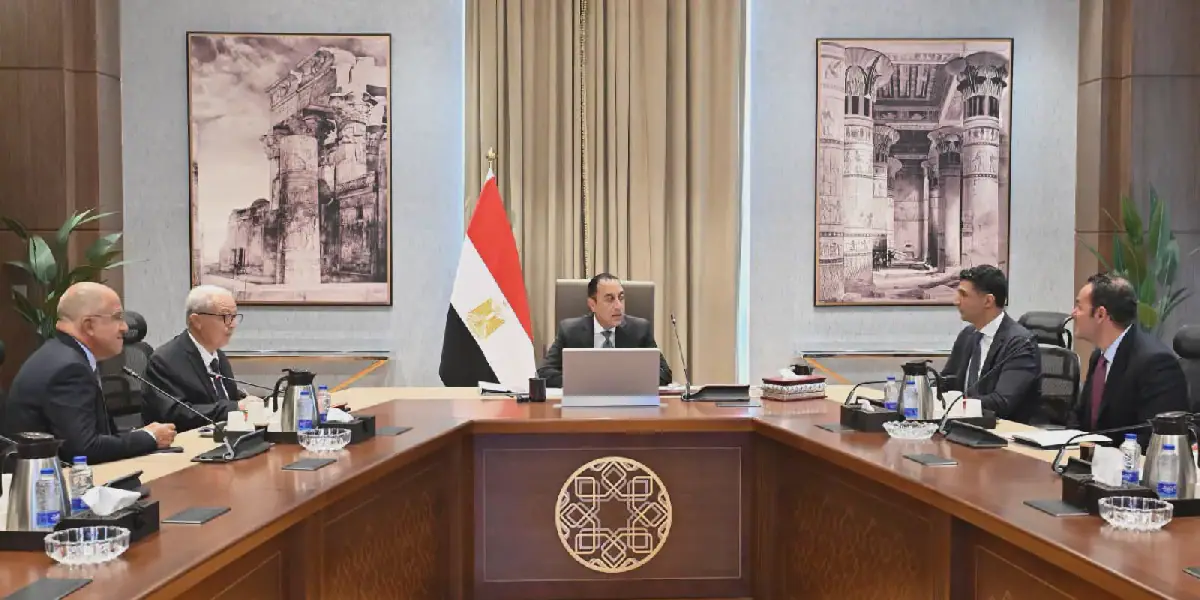
The Egyptian government has taken steps to deepen local manufacturing and expand investment incentives, as part of efforts to accelerate industrial growth and attract greater domestic and foreign investment. Prime Minister Moustafa Madbouly chaired an executive meeting at the cabinet headquarters in the New Administrative Capital to review proposals submitted by the Federation of Egyptian Industries (FEI). The meeting aimed to implement President Abdel Fattah Al-Sisi's directives to boost industrial growth and job creation.
The FEI has outlined a four-pronged strategy to enhance local manufacturing capabilities and increase industrial output across Egypt. The proposals include establishing a formal five-year government procurement forecasting mechanism to give local manufacturers 12 to 18 months to prepare and establish production lines in response to anticipated demand. This move is expected to help local manufacturers plan and invest in their production capacity.
The FEI also proposed transferring the management of vocational training centres affiliated with the Ministry of Labour to the private sector and the FEI. This aims to improve the quality and relevance of technical training, ensuring that workers have the necessary skills to meet the needs of local industries. Additionally, the federation suggested strict enforcement of Law No. 1 of 2015, which requires preference to be given to local products in government procurement and publicly funded contracts.
The fourth proposal seeks to extend the incentives provided under the Investment Law to Development Zones A and B across all industrial sectors, without restrictions based on specific activities. This move is expected to encourage investment in these zones and boost economic growth. In response, Madbouly directed all ministries and state entities to fully comply with local procurement requirements, warning that administrative measures would be taken against officials who purchase foreign products when locally manufactured alternatives are available.
Minister of Industry Khaled Hashem said that his ministry had already sent formal requests to all government ministries to identify their manufacturing and procurement needs over the next five years. He added that coordination was underway with the Ministry of Investment and Foreign Trade to expand the incentives available in Development Zones A and B. This aims to encourage investment and stimulate economic growth in these areas.
The Ministry of Industry is also working to improve the utilisation of government vocational training facilities in partnership with private sector operators. A Supreme Council for Training, chaired by the Ministry of Education and Technical Education, has been established to oversee this effort. This council aims to enhance the quality and relevance of technical training, ensuring that workers have the necessary skills to meet the needs of local industries.
The Egyptian government's efforts to deepen local manufacturing and expand investment incentives are part of a broader strategy to boost economic growth and job creation. The implementation of these proposals is expected to have a positive impact on the country's economy and industrial sector. The government has emphasized its commitment to supporting local industries and encouraging investment in the country.
Key points
- The Egyptian government has reviewed proposals to boost industrial growth and attract investment, including a four-pronged strategy to deepen local manufacturing capabilities.
- The proposals include establishing a formal government procurement forecasting mechanism and transferring vocational training centres to the private sector.
- The government aims to implement President Abdel Fattah Al-Sisi's directives to accelerate industrial growth and job creation.
Reporting sources
- Egypt moves to deepen local manufacturing, expand investment incentives · Daily News Egypt