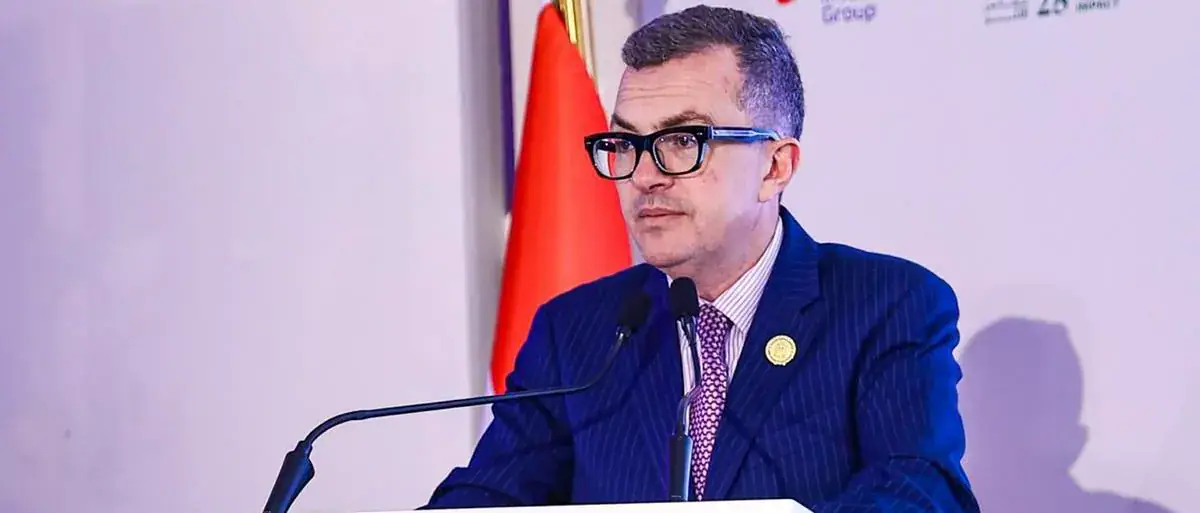
Egypt's Minister of Planning and Economic Development, Ahmed Rostom, and Minister of Supply and Internal Trade, Sherif Farouk, recently participated in the International Social Protection Forum "Hemaya 2026". The forum, held in the New Capital under the patronage of President Abdel Fattah El Sisi, focused on investing in human capital and social protection. The ministers emphasized the state's commitment to investing in human capital and developing the social protection system. They highlighted the importance of increasing investments in health and education, improving food subsidies, and expanding economic empowerment programs for vulnerable families.
According to Minister Rostom, public investments in human development over the past 12 years have totaled approximately LE 1.5 trillion. The health, education, and social protection sectors account for 48 percent of total government investments in the current fiscal year's plan. Rostom stressed that investing in human capital is a fundamental pillar for achieving sustainable economic growth, rather than just a social priority. The state adopts an integrated approach to human development aimed at ensuring the equitable distribution of economic growth dividends, in line with the goals of "Egypt Vision 2030" and the Comprehensive National Social Protection Framework.
Minister Rostom reviewed the state's efforts in implementing the national project for developing the Egyptian countryside, "Decent Life" (Hayah Karima). The first phase of the project benefits approximately 18 million citizens across 20 rural governorates, with human-building and public health investments accounting for 73 percent of its total financial allocations. The state aims to complete the second and third phases of the initiative, extending the project's coverage umbrella to 57 percent of the Republic's total population.
Minister Rostom also highlighted the shift in the philosophy of social protection from providing solely direct cash support to economic empowerment and capacity building. The state is helping families benefiting from the "Takaful and Karama" program find sustainable sources of income and gradually move out of the cycle of poverty. This approach aims to grant families greater freedom in choosing their food needs and help diversify food sources.
Minister Farouk emphasized that investing in human capital begins with meeting basic human needs, including providing sufficient and diverse food that supports health and healthy growth. The ration subsidy system serves approximately 24 million households, with around 64.5 million citizens benefiting from the subsidized bread system and about 57.5 million citizens benefiting from the ration commodities system.
The Ministry of Supply and Internal Trade is working to upgrade the ration subsidy system to enhance resource-targeting efficiency and raise the nutritional value of goods provided to citizens. The ministry presented its vision for enhancing equity and flexibility in targeting subsidies and improving resource efficiency during the "Egypt Forum 2026". The move toward a gradual transition to conditional/commodity-linked cash support aims to help families make better use of allocated subsidy resources.
The Egyptian government has allocated LE 178.3 billion for bread and ration commodity subsidies in the FY 2026/2027 budget. The ministers' efforts focus on improving the efficiency and nutritional value of food subsidies, expanding economic empowerment programs, and enhancing social protection. These initiatives aim to support early childhood, nutrition, and education, ultimately contributing to sustainable economic growth and human development in Egypt.
Key points
- Egypt's government invests in human capital through health, education, and social protection sectors.
- The state aims to upgrade the ration subsidy system to enhance resource-targeting efficiency.
- The "Decent Life" project benefits approximately 18 million citizens across 20 rural governorates.