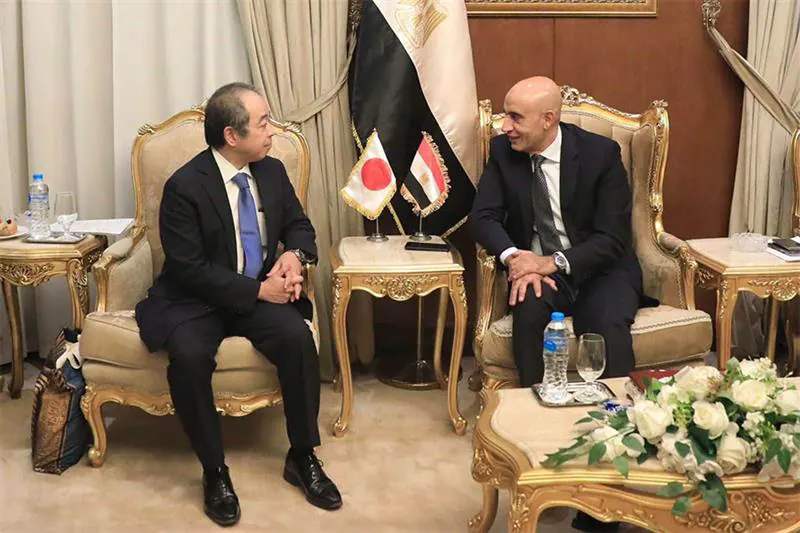
Egyptian Education Minister Mohamed Abdel-Latif met with senior Japanese officials on Sunday, 27 September 2026, to discuss expanding educational cooperation between the two countries. The meeting brought together Takao Imafuku, director-general of the International Cooperation Bureau at Japan’s Ministry of Foreign Affairs, and Yu Ebisawa, chief representative of the Japan International Cooperation Agency (JICA) in Egypt. The discussions focused on enhancing the partnership in education, which has been a key area of collaboration between Egypt and Japan.
Minister Abdel-Latif emphasized that Japan is Egypt’s main strategic partner in education, highlighting the positive outcomes of their cooperation in developing the education system. The partnership aims to adapt Japanese educational practices to Egypt’s needs, covering areas such as the expansion of Egypt-Japan schools, teacher training, curriculum development, and technical education. The Egypt-Japan Schools program has grown to over 100 schools nationwide, combining the Egyptian curriculum with Japanese "Tokkatsu" activities that focus on character development, skills, and values.
The meeting also covered cooperation with Japanese universities, institutions, and companies on education projects. Imafuku praised the results of the education cooperation between the two countries, saying that he had not seen a similar-scale and diverse education cooperation model in his career. He reaffirmed Japan’s commitment to supporting the partnership and expanding opportunities to share its experience. Ebisawa also expressed JICA’s support for joint education projects and the use of Japanese expertise to strengthen institutional and human capacities.
The Egypt-Japan Schools network has expanded to 103 schools nationwide, with plans to increase the number to 500 by 2030, as per directives from President Abdel-Fattah El-Sisi. The ministry has introduced Japanese-language instruction in 10 schools and plans to build on the model’s achievements to expand its reach. The meeting also discussed the role of Japanese experts and supervisors in Egypt-Japan Schools, with plans to increase their number to about 100 experts to support knowledge transfer and improve performance.
The two sides discussed curriculum development, including updates to mathematics curricula for grades 1 through 3 and science curricula for grades 4 through 6. They also reviewed cooperation on science and mathematics curricula for Egypt’s Egyptian Baccalaureate program, a newly introduced secondary education program for high school students. Japanese experts are contributing to the development of educational content and learning outcomes for these programs.
The cooperation with Japan is part of a broader government effort to upgrade Egypt’s education system by shifting away from rote memorization and traditional teaching methods. The reforms aim to equip students with the skills needed to understand, analyze, and apply knowledge rather than rely primarily on memorization-based learning. The partnership with Japan is expected to play a significant role in achieving these goals.
The two countries are also cooperating on technical education, including plans to upgrade 20 technical schools into international technical schools based on Japanese curricula and standards. The initiative aims to equip graduates with the scientific, practical, and professional skills needed in the labor market. The meeting concluded with a reaffirmation of the strong partnership between Egypt and Japan in education and a commitment to further expanding cooperation in the future.
Key points
- Egypt and Japan are expanding their education partnership to include teacher training, curriculum development, and technical education.
- The Egypt-Japan Schools program aims to combine the Egyptian curriculum with Japanese "Tokkatsu" activities, focusing on character development, skills, and values.
- Egypt plans to increase the number of Egypt-Japan Schools to 500 by 2030.