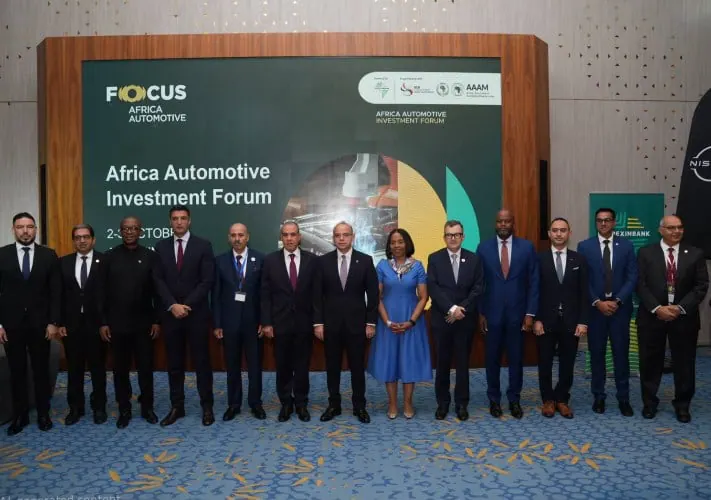
The Egyptian government, in collaboration with the African Export-Import Bank (Afreximbank), the South African Department of Trade, Industry and Competition, and the African Continental Free Trade Area (AfCFTA) Secretariat, hosted the FOCUS AFRICA AUTOMOTIVE INVESTMENT FORUM in the New Administrative Capital. The forum, attended by ministers from Egypt and other African countries, aimed to convert Africa's industrial potential into investment opportunities and projects. Egypt's Minister of Investment and Foreign Trade, Dr. Mohamed Farid, emphasized the need to develop a competitive African automotive industry.
The African automotive industry currently produces around 1.2 million vehicles annually, with expected demand rising to between 3.5 and 5 million vehicles by 2035. This presents opportunities for expansion in manufacturing, technology transfer, and development of a supplier base. Dr. Farid highlighted the importance of the African Continental Free Trade Area (AfCFTA) in creating a unified market and promoting economic integration. The AfCFTA's rules of origin for the automotive sector, which require a minimum of 40% African content, are seen as an opportunity to deepen manufacturing and increase reliance on locally produced raw materials and components.
The forum focused on transforming industrial potential into investment opportunities and projects that support the development of integrated regional supply chains and enhance manufacturing capabilities with added value. Dr. Farid stressed the need to move from policy development to actual investment implementation by developing suppliers, upgrading customs infrastructure, and aligning policies. He also highlighted Afreximbank's commitment to allocating $1 billion to finance the African automotive industry.
To develop a comprehensive African automotive industry, it is essential to identify available industrial and technological capacities in African countries and link them to investment opportunities and demand. This helps determine gaps in production chains and opens up opportunities for new investments in component manufacturing and technology. Dr. Farid emphasized the importance of connecting industrial zones and logistics corridors, as well as developing necessary facilities for the movement of components and products between African countries.
The standardization of standards, testing, and accreditation procedures between African countries is crucial to facilitate the movement of products and vehicles between markets and promote trade. Dr. Farid highlighted the need for cooperation between policymakers and the private sector to identify practical differences between standards and specifications and develop applicable solutions that support industrial integration.
The Egyptian government has launched a national program to develop the automotive industry, aiming to create a competitive base for the industry and its components, attract global companies, and deepen local production and exports. The program offers incentives linked to measurable performance indicators. Egypt's Minister of Investment and Foreign Trade emphasized the country's potential to develop the automotive industry, given its market size, industrial base, and strategic location.
The forum also witnessed the official launch of the Egyptian-South African Business Council, which aims to enhance communication between the business communities of both countries and open up new areas for partnership and investment. Dr. Farid expressed Egypt's readiness to enhance cooperation with Afreximbank, the AfCFTA Secretariat, and the African Association of Automotive Manufacturers (AAAM) to support the establishment of regional production centers and develop joint projects.
Key points
- The forum aimed to transform Africa's industrial potential into investment opportunities and projects that support the development of integrated regional supply chains and enhance manufacturing capabilities with added value.
- The African automotive industry currently produces around 1.2 million vehicles annually, with expected demand rising to between 3.5 and 5 million vehicles by 2035.
- Egypt has launched a national program to develop the automotive industry, aiming to create a competitive base for the industry and its components, attract global companies, and deepen local production and exports.