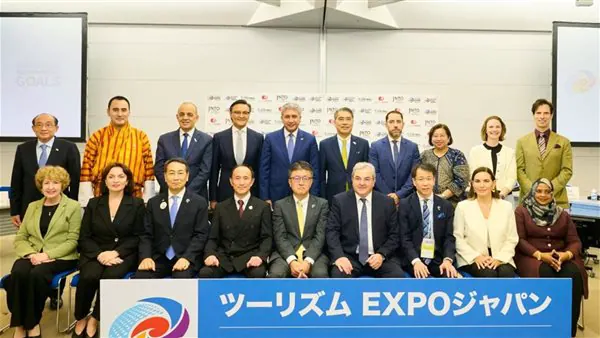
Egyptian Tourism and Antiquities Minister Sherif Fathy recently participated in the 9th Ministerial Roundtable, held in conjunction with Tourism Expo Japan 2026 in Tokyo, Japan. The event, which took place from September 24 to 26, brought together tourism ministers from various countries to discuss strategies for a more sustainable and resilient tourism sector. Fathy emphasized the importance of building a sector that not only preserves current resources but also creates long-term value for destinations and local communities.
The ministerial roundtable focused on several key topics, including global challenges facing the tourism sector, investment strategies for regenerative tourism, environmental conservation, and tourism infrastructure. Fathy highlighted Egypt's commitment to developing a resilient tourism sector that prioritizes environmental protection, heritage preservation, and innovation. He also stressed the importance of investing in human capital, the sector's most valuable resource. Egypt's tourism strategy aims to promote sustainable tourism practices and create a positive impact on local communities.
Fathy outlined Egypt's vision for the tourism sector, which involves showcasing the country's unique diversity and creating a more resilient and sustainable sector. The strategy includes promoting eco-friendly practices, developing partnerships between the public and private sectors, and enhancing the overall tourist experience. The minister emphasized that preserving Egypt's natural and cultural heritage is a top priority, and the country is working to promote sustainable tourism practices throughout the sector.
The Egyptian government is also focusing on digital transformation and the use of artificial intelligence to improve the efficiency of tourism management. Fathy noted that investing in human capital is crucial to achieving these goals and that the sector's future depends on the quality of its workforce. To address this, the Ministry of Tourism and Antiquities has launched the Egyptian Tourism and Antiquities Training Platform (EGTAP) to develop the skills of sector workers.
Fathy also discussed the country's collaboration with Japan, particularly in the context of the Grand Egyptian Museum. He highlighted the museum's significance not only as a cultural institution but also as a center for scientific research. The minister mentioned that the museum offers training programs in archaeological restoration for international institutions and will soon begin restoring a second ancient boat in a project undertaken in cooperation with Japan.
The ministerial roundtable included participation from tourism ministers of various countries, including Azerbaijan, Gabon, Georgia, Greece, Japan, Jordan, Bhutan, Kyrgyzstan, the Philippines, and Tanzania. Representatives from international tourism organizations, such as the World Travel & Tourism Council, the United Nations World Tourism Organization, and the Japan National Tourism Organization, also attended the event.
The Tourism Expo Japan 2026 provided a platform for Egypt to showcase its tourism potential and engage with international partners. Fathy's participation in the event reflects Egypt's commitment to promoting sustainable tourism practices and collaborating with the global tourism community. The country's focus on building a resilient and sustainable tourism sector is expected to have a positive impact on its economy and local communities.
Key points
- Egypt is prioritizing sustainable tourism practices and investing in human capital to build a resilient tourism sector.