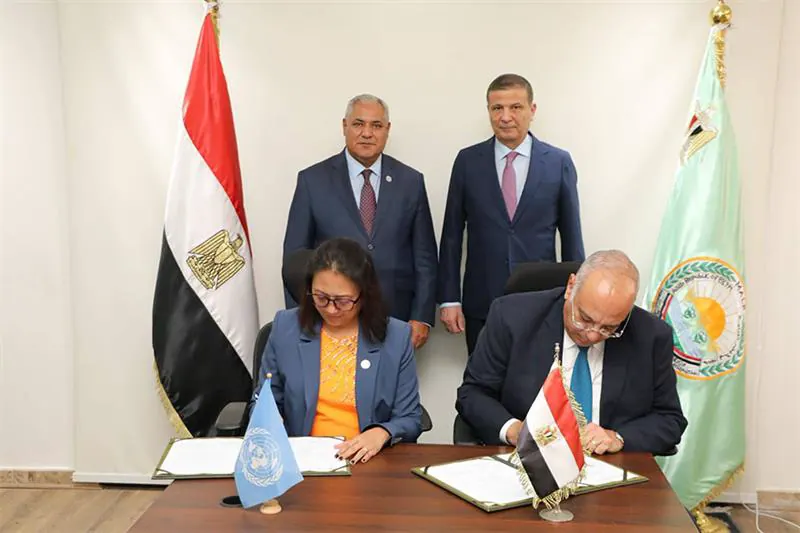
Egypt and the United Nations Food and Agriculture Organization (FAO) have signed two agreements to support agricultural development in South Sinai and strengthen the country's olive sector. The agreements were signed by Agriculture and Land Reclamation Minister Alaa Farouk and AbdulHakim Elwaer, FAO regional representative for the Near East and North Africa. The deals aim to establish a master plan for agricultural and rural development in South Sinai and create a strategic framework for developing Egypt's olive value chain.
The agreements reflect Egypt's efforts to strengthen partnerships with international organizations to support sustainable agricultural development. Minister Farouk stated that the South Sinai project would focus on empowering local communities, particularly young people and women, creating sustainable livelihoods, and integrating local production into agricultural and food value chains. The project also aims to make better use of the governorate's natural resources.
The South Sinai project builds on previous initiatives to expand agricultural activity in the governorate. In August 2025, Egypt announced that it had cultivated cotton in South Sinai's desert for the first time, as part of national strategies to combat desertification, expand agricultural land, and bring unused areas into production. This effort is part of a broader plan to develop the region.
The olive sector agreement will support the expansion of olive cultivation, particularly oil-producing varieties, in line with government priorities. The project will assess the sector from production and processing to marketing and consumption, identifying opportunities and challenges across the value chain. This assessment will inform a national strategy to raise productivity and improve the competitiveness of Egyptian olives and olive products.
The FAO will work with Egyptian experts on a national assessment of the olive value chain, providing the government with data and analysis to help develop a strategy to promote sustainable economic growth and food security in the sector. This collaboration aims to enhance the olive sector's contribution to Egypt's economy.
The agreements demonstrate Egypt's commitment to sustainable agricultural development and its efforts to address climate-related challenges. The country is preparing a coastal management plan through 2100 to address climate risks. This plan is part of a broader effort to mitigate the impacts of climate change.
The partnerships with international organizations, such as the FAO, are crucial for Egypt's sustainable development goals. By working together, Egypt and the FAO can leverage resources and expertise to drive growth and improve food security in the country.
Key points
- Egypt and FAO sign agreements to develop South Sinai agriculture and olive sector
- Agreements aim to establish a master plan for agricultural and rural development in South Sinai
- FAO to work with Egyptian experts on a national assessment of the olive value chain