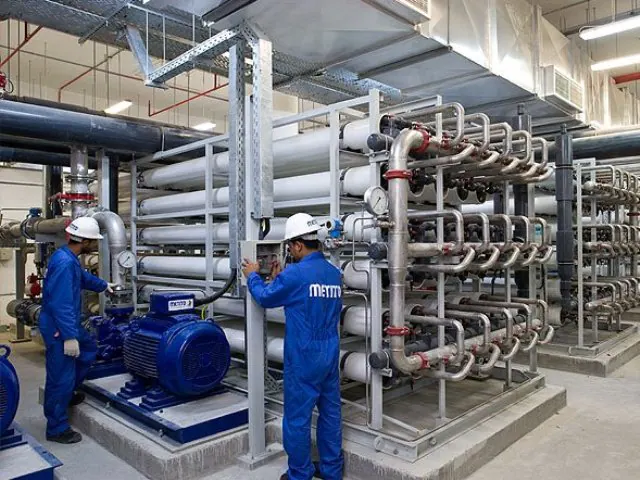
Egyptian Minister of Electricity and Renewable Energy Mahmoud Esmat held talks with HydroVolta President George Brik on September 19, 2026, to explore potential cooperation in seawater desalination and saline groundwater treatment. The discussions focused on leveraging infrastructure at electricity generation plants for desalination projects and recovering minerals and chemicals from desalination waste. This meeting marks a significant step in Egypt's efforts to address its water needs through innovative technologies.
During the talks, HydroVolta officials presented their SonixED technology, which utilizes electrical separation and ultrasound to remove salts and other substances from water. According to the Ministry, this technology can reduce salt buildup, chemical use, and energy consumption during water treatment. Additionally, it can treat highly saline groundwater, producing water suitable for drinking or irrigation. This technology has the potential to play a crucial role in Egypt's water treatment processes.
Egypt aims to increase its desalination capacity to 10 million cubic meters of water per day by 2050. The plan is divided into two phases, with the first phase targeting 3.35 million cubic meters per day. This phase may include the production of chemicals from desalination waste, reducing the need for imported materials. The second phase will focus on systems to extract and process magnesium for commercial use, further enhancing the country's water treatment capabilities.
The meeting also addressed the use of solar and wind power for desalination, which could significantly reduce operating costs. By harnessing renewable energy, Egypt can make its desalination processes more sustainable and environmentally friendly. This approach aligns with the country's broader goals of increasing the use of renewable energy sources.
Minister Esmat emphasized Egypt's desire to attract private and foreign investment in desalination, expand local production of equipment and components, and introduce modern water treatment technologies into the country. By collaborating with international partners like HydroVolta, Egypt can leverage expertise and technology to enhance its water security.
The SonixED technology presented by HydroVolta can recover several products from desalination waste, including magnesium hydroxide, calcium carbonate, sodium chloride, potassium chloride, bromine, and hydrochloric acid. This capability can contribute to the development of a circular economy in Egypt, where waste from one process becomes a valuable input for another.
The discussions between Minister Esmat and President Brik highlight Egypt's proactive approach to addressing its water challenges. By exploring innovative technologies and international partnerships, the country is working towards sustainable solutions to meet its growing water needs. The outcome of these talks will be crucial in shaping Egypt's future water strategy.
Key points
- Egypt aims to increase its desalination capacity to 10 million cubic meters of water per day by 2050.
- HydroVolta's SonixED technology can reduce salt buildup, chemical use, and energy consumption during water treatment.
- Egypt plans to use solar and wind power for desalination to reduce operating costs.