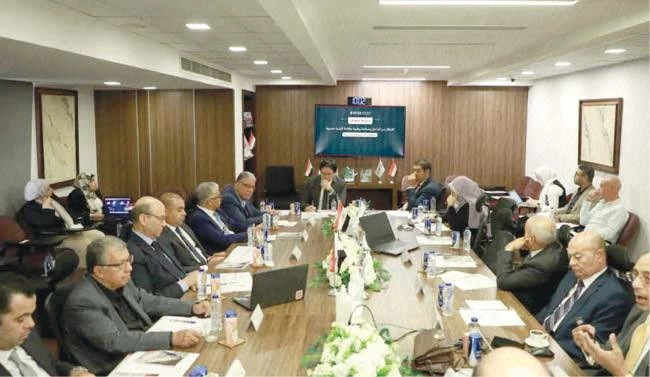
The Egyptian Center for Thought and Strategic Studies recently hosted an expanded symposium on the innovation system and its connection to industry. The second day of discussions resulted in a set of recommendations aimed at bridging the gap between technology production and its conversion into applicable and marketable economic products. One key suggestion was the establishment of a specialized entity to market innovations, which would act as a liaison between researchers, the industrial sector, and investors.
The proposed entity would have clear negotiation powers and be responsible for protecting intellectual property rights, ensuring the sustainability of research projects. Participants emphasized the need to transition from treating scientific research as a separate activity to integrating it into the production system. This would involve a clear institutional connection between universities, research centers, the industrial sector, export councils, and government agencies.
The goal is to initiate research based on actual industry needs, with suitable funding and facilitation mechanisms to guide it from laboratory to production and market. Recommendations also included addressing the funding gap, particularly in the transitional phases between research and industrial production. Developing financing tools for medium-sized industrial companies and linking government purchases to stimulating demand for locally innovated products were also suggested.
Participants called for unifying state policies related to manufacturing, localization, export, and innovation. They also recommended linking foreign investment policies to technology transfer and local production capacity building. Distinctions should be made between investments seeking market share and those adding new technology, knowledge, and production capabilities to the Egyptian economy.
Speakers agreed that the challenge no longer lies in the lack of ideas and research but in creating the missing link that transfers knowledge from laboratories to factories and then to local and external markets. This would convert innovation from scattered research results into sustainable economic and industrial value. Dr. Rehab Ali Hussein, a professor of pharmacology, noted that her center has taken steps to link research results to industrial and investment applications.
Hussein mentioned that the center has attempted to encourage researchers to engage in entrepreneurship, but this approach has not yielded the desired outcomes. Instead, the center has focused on establishing technology incubators to support and finance research projects. However, high transition costs from laboratory research to experimental production remain a significant challenge. Hussein emphasized the need for joint financing mechanisms for research, development, and initial experiments.
Experts, including Ayman Abou Zahra, Executive Director of a pharmaceutical company, and Dr. Tameem El-Dawy, Deputy Executive Director of the Food Exports Council, stressed the importance of streamlining procedures for registering innovative products and providing incentives for local product support. They also highlighted the need for a specialized entity to bridge the gap between scientific research and industry, facilitating the conversion of research results into marketable products.
Key points
- Establishing a specialized entity to market innovations and link research to industry
- Addressing funding gaps and developing financing tools for industrial companies
- Unifying state policies related to manufacturing, localization, and innovation