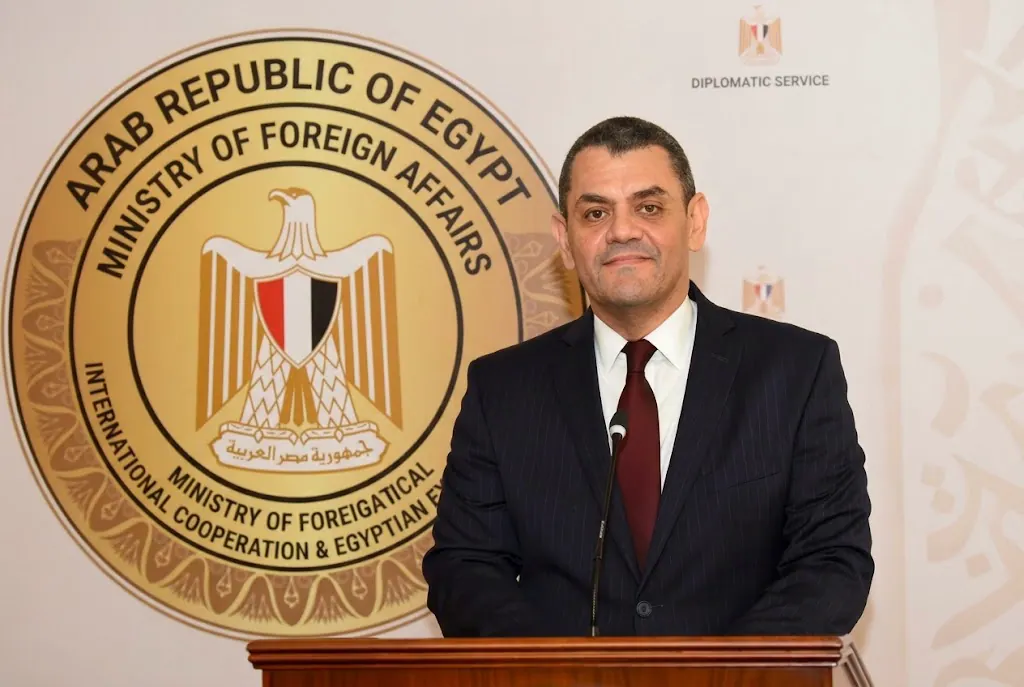
Egypt's Foreign Ministry has denied any involvement in supporting armed groups fighting Ethiopia's federal government. The denial comes after Field Marshal Birhanu Jula, Ethiopia's army chief, alleged that outside powers, including Egypt, were aiding the offensive in northern Ethiopia. Foreign Ministry spokesman Nader Zaki stated that Egypt's foreign policy is based on respect for the sovereignty, unity, and territorial integrity of other states.
The dispute escalates as fighting in northern Ethiopia worsens, spreading into the Afar and Amhara regions and raising fears of a wider war and more displacement. Ethiopian Airlines suspended flights to Tigray's Mekelle, Axum, and Shire last week after Tigrayan forces seized the airport in Mekelle, the regional capital. The violence has put the 2022 Pretoria peace deal, which ended two years of war between Addis Ababa and Tigray forces, at risk.
Field Marshal Birhanu Jula's allegations were made in comments distributed by the Ethiopian military, but no evidence was provided to support the claims. Sudan's military has separately dismissed the allegation as unfounded. Egypt's Foreign Minister Badr Abdelatty recently reiterated the importance of respecting sovereignty and territorial integrity in the Horn of Africa during talks with his Eritrean counterpart.
The relationship between Egypt and Ethiopia remains strained over the Grand Ethiopian Renaissance Dam. Egypt continues to insist that any dam operation be governed by a binding agreement involving both downstream nations, Egypt and Sudan. The dam has been a source of friction since Ethiopia began construction in 2011 on the Blue Nile, the source of most of the water that reaches Egypt.
Egypt relies heavily on the Nile for its fresh water and fears that the dam's filling and operation could sharply reduce its water supply, particularly during periods of drought. Addis Ababa argues that the project is essential to its development, as it needs the dam to expand electricity access domestically and export power across the region.
Years of negotiations among Egypt, Sudan, and Ethiopia have failed to produce a binding agreement on how the dam should be filled and operated. Ethiopia has continued to move forward with the project, declaring the dam's completion earlier this year, a move Cairo has said does nothing to resolve its core concerns.
Egypt's stance on the dam and its commitment to non-interference in other countries' internal affairs have been reaffirmed by Foreign Ministry spokesman Nader Zaki. Any claims that question Egypt's adherence to these principles have no basis in fact, according to Zaki. The situation remains tense as the conflict in northern Ethiopia continues to escalate.
Key points
- Egypt denies backing rebel forces in northern Ethiopia
- Dispute over Grand Ethiopian Renaissance Dam strains Egypt-Ethiopia relations
- Fighting in northern Ethiopia worsens, putting 2022 peace deal at risk