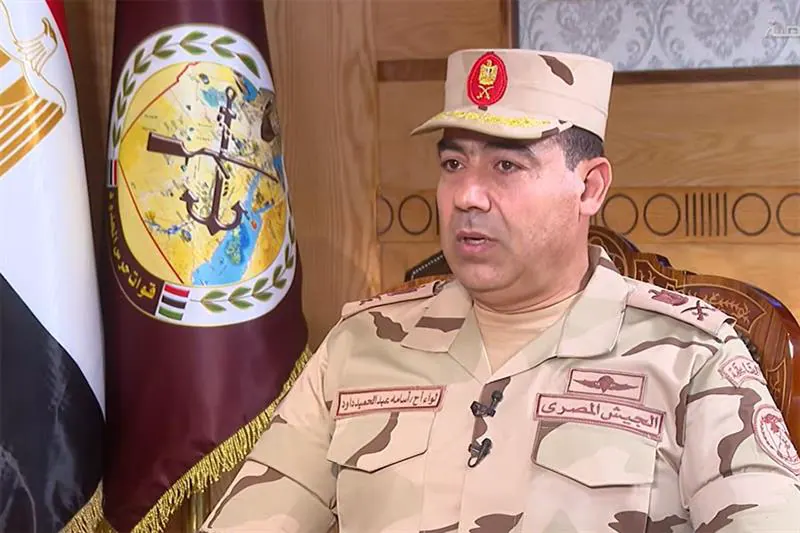
Egypt and Saudi Arabia are working together to secure their shared maritime boundary areas in the Gulf of Aqaba and Red Sea. Major General Osama Abdel Hamid Dawood, Commander of Egypt's Border Guard Forces, stated that the two countries exchange information and coordinate to prevent infiltration, smuggling, and irregular migration. This cooperation is part of broader efforts to strengthen Egypt-Saudi strategic ties and coordination on regional security. The two nations have a shared interest in maintaining security in the region.
Egypt's Border Guard Forces are responsible for securing 5,585 kilometers of borders, including 2,995 kilometers of Mediterranean and Red Sea coastline and 2,590 kilometers of land borders. The forces conduct surveillance, reconnaissance, and early-warning operations around the clock to identify threats across Egypt's strategic frontiers. Their duties include countering the smuggling of people, narcotics, and goods, as well as search-and-rescue operations for people lost in border regions. The forces also work with relevant ministries to enforce laws and presidential decrees governing border areas.
The Border Guard Forces use a range of measures to secure Egypt's borders, including fixed observation posts, patrols, and layered security formations supported by modern surveillance and reconnaissance systems. The forces also employ uncrewed aerial vehicles to conduct reconnaissance alongside patrols on the western and southern borders. In addition, modern patrol boats are operated in coordination with the Navy to secure coastal frontiers, while the Air Force supports reconnaissance over land-border areas.
Egypt's large border perimeter presents substantial geographic, climatic, and logistical challenges. The Great Sand Sea and the Gilf Kebir plateau along the western frontier, as well as mountainous terrain east of the Nile on the southern front, pose significant difficulties. Changing weather conditions and sandstorms require strong logistical, administrative, technical, and morale support for personnel serving in remote border areas. The forces must also contend with smugglers who continually adopt unconventional methods to move contraband into or out of Egypt.
Instability in neighboring states has increased the security burden on Egyptian forces. In some areas, counterpart border units are absent on the other side of the frontier or lack sufficient capabilities to control it effectively. Egypt has consequently intensified patrols and adopted unconventional security plans in coordination with Armed Forces branches, field formations, and regional military commands. The Armed Forces' border-security plan is continuously updated to address new threats and incorporate modern equipment.
Egypt has made significant progress in preventing irregular migration departures from its northern coasts since 2016. Major General Dawood stated that the country has managed to stop and completely prevent this phenomenon along its northern coasts. However, economic conditions in neighboring countries continue to drive some individuals to attempt infiltration or irregular migration through Egypt's borders. The forces have intercepted and returned individuals attempting to cross the border, subjecting them to applicable legal procedures.
The Egyptian Border Guard Forces also tackle the issue of illegal gold prospecting, which has been encouraged by economic hardship in areas south of Egypt. Authorized national companies have been assigned to exploit mineral resources in these areas, but outlaws are still attracted to the prospect of extracting gold from raw veins. The Border Guard has deployed patrols to illegal prospecting areas, working with the Air Force and intelligence agencies to identify and apprehend offenders.
Key points
- Egypt and Saudi Arabia coordinate to secure maritime boundary areas in the Gulf of Aqaba and Red Sea.
- Egypt's Border Guard Forces secure 5,585 kilometers of borders, including coastline and land borders.
- Egypt has prevented irregular migration departures from its northern coasts since 2016.