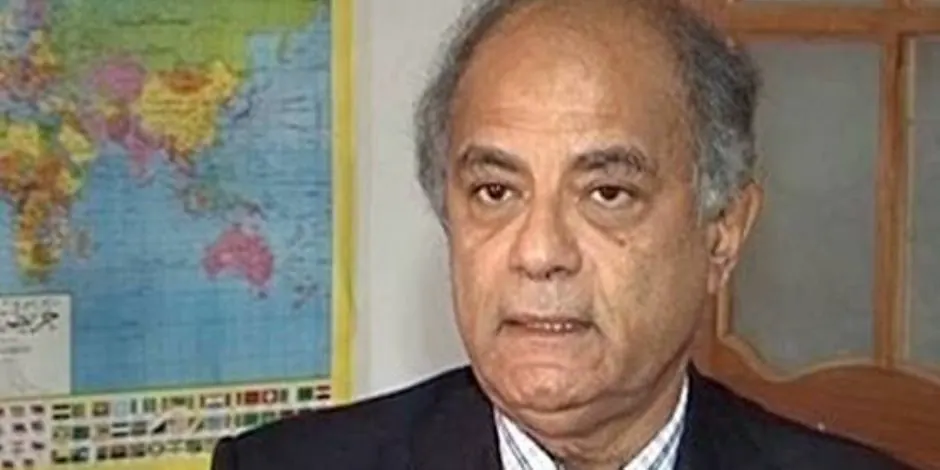
Egyptian Ambassador Hussein Haridi, former Assistant Foreign Minister, stated that Egypt's foreign policy is based on a set of established principles, including respect for the UN Charter and adherence to international law. He made these remarks on the occasion of the International Day of Peace, highlighting Egypt's commitment to resolving conflicts and disputes through peaceful and diplomatic means. Haridi emphasized the importance of upholding international law and the UN Charter in dealing with crises.
Haridi noted that Egypt continuously works to contain crises and prevent the escalation of conflicts into wars. He cited Egypt's positions on avoiding escalation in the Gulf region and the southern Red Sea, as well as efforts to find political and diplomatic solutions to crises in Sudan, Libya, and southern Lebanon. Egypt's approach is centered on finding peaceful solutions, with a focus on implementing Chapter Six of the UN Charter, which provides a framework for resolving international disputes through peaceful means.
The Egyptian government's commitment to peaceful conflict resolution is reflected in the positions of President Abdel Fattah El-Sisi and the country's diplomatic efforts. Haridi pointed to the President's speech at the BRICS summit in New Delhi, which emphasized the need to avoid escalation and seek peaceful solutions to crises. Egypt participates in various international, regional, and Arab initiatives aimed at achieving peaceful solutions to conflicts, and supports stability in several key areas, including the Gulf, Red Sea, Sudan, Somalia, and the Russian-Ukrainian crisis.
The ongoing crises in the Gulf, Red Sea, North Africa, and the Horn of Africa have significant implications for Egypt's national security, affecting its economy, finances, and human security. Egypt hosts a large number of citizens from countries affected by these crises. Haridi stressed that the Palestinian issue holds a special place in Egyptian politics, with Egypt continuing to support a peaceful settlement to the conflict within the framework of international legitimacy and a two-state solution.
Egypt's commitment to peaceful conflict resolution is guided by its experience and its role in regional and international affairs. The country has a long history of diplomatic engagement and has played a key role in various peace processes. Haridi highlighted Egypt's efforts to promote a culture of peace and to support international and regional initiatives aimed at preventing conflicts and promoting stability.
The International Day of Peace provides an opportunity for countries to reaffirm their commitment to peaceful conflict resolution and to promoting a culture of peace. Egypt's approach to conflict resolution is centered on dialogue, diplomacy, and a commitment to international law. Haridi emphasized that Egypt will continue to work towards promoting peace and stability in the region and beyond.
In conclusion, Egypt remains committed to resolving conflicts through peaceful and diplomatic means, in line with the UN Charter and international law. The country's approach is guided by its experience and its role in regional and international affairs. With its ongoing efforts to promote peace and stability, Egypt continues to play a key role in regional and international peace processes.
Key points
- Egypt's commitment to peaceful conflict resolution is reflected in its support for a two-state solution to the Palestinian conflict.
- The country continues to play a key role in regional and international peace processes.
- Egypt's approach to conflict resolution is centered on dialogue, diplomacy, and a commitment to international law.