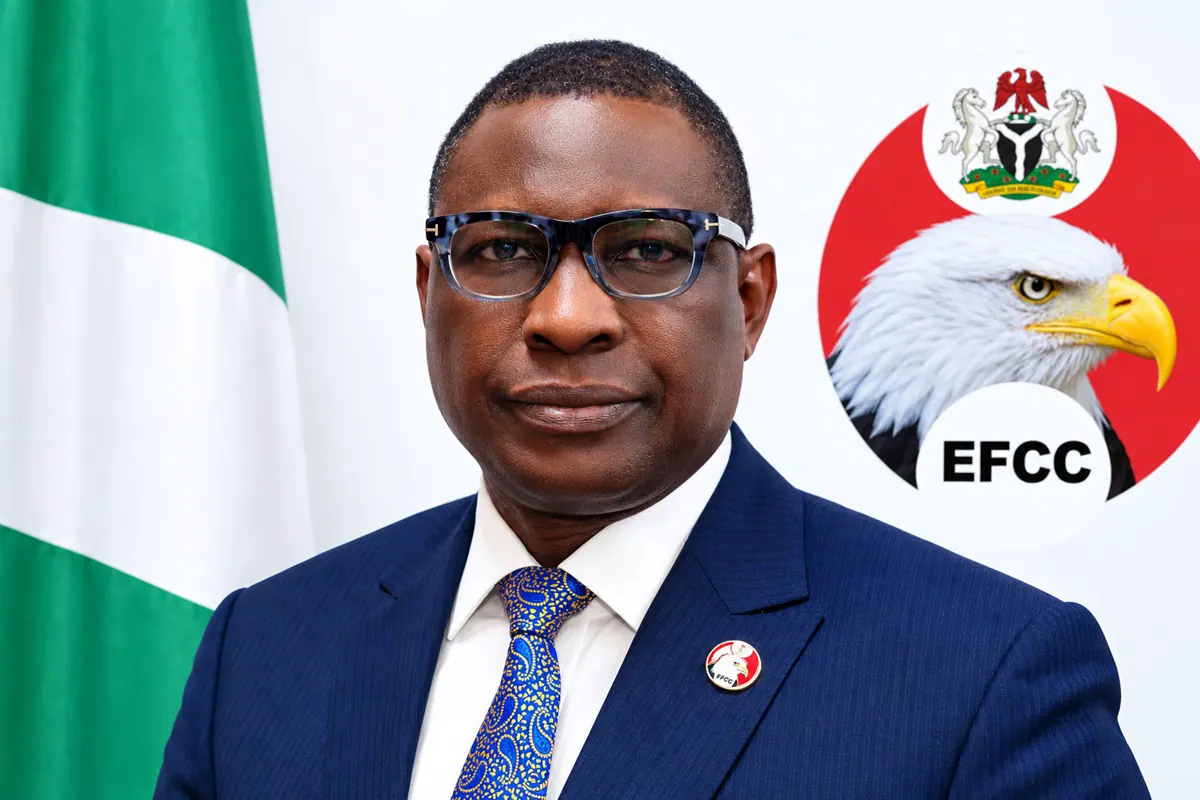
The Economic and Financial Crimes Commission (EFCC) has called for stronger collaboration between religious institutions and anti-corruption agencies, declaring that corruption has no religious, ethnic or tribal identity. EFCC Chairman, Ola Olukoyede, made this declaration on Wednesday in Abuja at a meeting of the Nigeria Inter-Religious Council (NIREC), where the Inter-Faith Manual on anti-corruption was unveiled. The manual aims to provide Christian and Muslim religious leaders with material for addressing corruption, fraud, integrity and responsible citizenship in sermons and other forms of religious instruction.
The meeting, themed “Shared Sacred Flourishing in Nigeria,” brought together senior Christian and Muslim leaders, including the President of the Christian Association of Nigeria (CAN), Most Rev. Daniel Okoh, and the Sultan of Sokoto, Alhaji Muhammad Sa’ad Abubakar III. The Inter-Faith Manual was unveiled by the Secretary to the Government of the Federation (SGF), Senator George Akume. Olukoyede emphasized that corruption has become a profound moral challenge to Nigeria’s pursuit of shared prosperity, arguing that the damage caused by financial crimes extends far beyond government accounts and balance sheets.
According to Olukoyede, corruption directly affects the quality of life of ordinary citizens because resources diverted through graft are resources that should have been used to provide public services. He illustrated the consequences by pointing to the diversion of funds meant for hospitals, saying that when money meant for a hospital is stolen, the offence may be recorded as corruption, but its consequence may be a patient who cannot receive treatment.
The EFCC chairman stressed that financial crimes cannot be classified according to the religion or ethnicity of those who commit them. He said that corruption has no tribe, and fraud does not become Christian or Muslim because of the identity of the person accused of committing it. Olukoyede maintained that the consequences of corruption are shared across religious and ethnic boundaries, adding that when public money is stolen, both Christians and Muslims suffer.
Olukoyede said that religious institutions have a critical role to play in preventing corruption because faith leaders can influence character in ways that law enforcement cannot. He drew a distinction between the functions of the EFCC and religious institutions, saying that the commission can investigate and prosecute criminal conduct, while faith communities can help shape the values that determine how people behave.
The NIREC Executive Secretary, Prof. Cornelius Omonokhua, challenged the EFCC to extend its scrutiny to religious leaders accused of preaching hate or allegedly using churches and mosques as platforms for partisan political fundraising. Olukoyede, however, cautioned religious and ethnic communities against treating investigations involving their prominent members as attacks on their faith or identity.
The EFCC’s engagement with NIREC was informed by the recognition that religious institutions possess significant influence over the values and behaviour of Nigerians. The EFCC chairman noted that Nigeria is a deeply religious society, with millions of citizens attending churches and mosques regularly, but questioned whether the country’s strong religious identity was sufficiently reflected in public conduct and economic life.
Key points
- Corruption has no religious, ethnic or tribal identity and its consequences are suffered by Nigerians irrespective of their faith.
- The EFCC has unveiled an Inter-Faith Manual designed to help Christian and Muslim leaders incorporate anti-corruption teachings into sermons, religious education and community engagement.
- Religious institutions have a critical role to play in preventing corruption by influencing character in ways that law enforcement cannot.