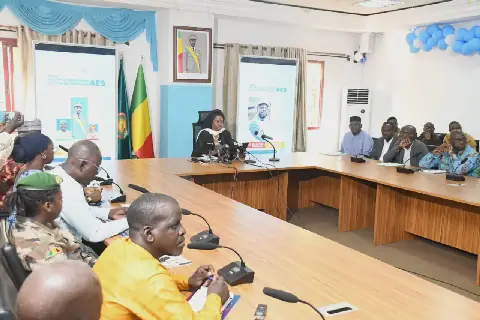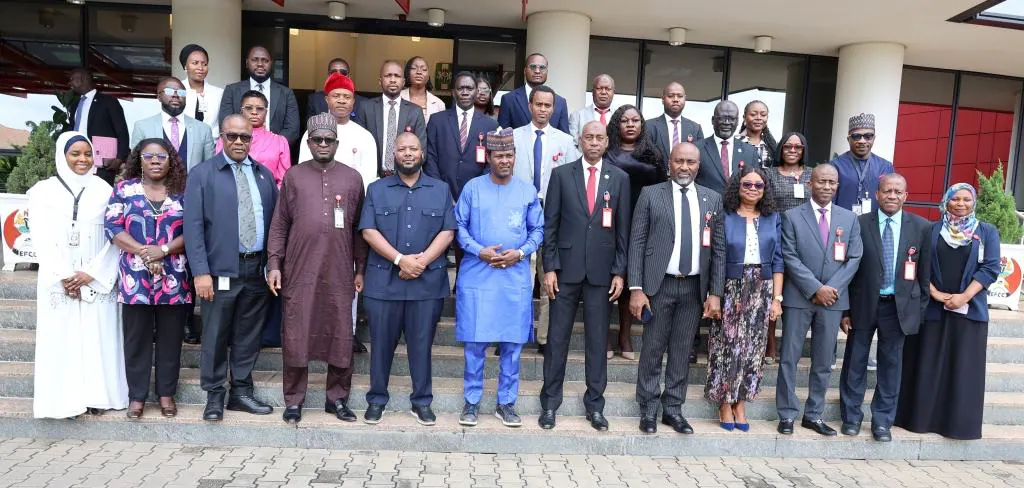
The Economic and Financial Crimes Commission (EFCC) and the Nigerian Financial Intelligence Unit (NFIU) have started a three-day review to assess Nigeria's readiness for the 2027 Mutual Evaluation of the Financial Action Task Force (FATF). This evaluation will examine Nigeria's implementation of measures against money laundering and terrorist financing. The exercise, which began at the EFCC headquarters in Abuja, aims to review progress, identify gaps, and strengthen inter-agency cooperation.
Nigeria exited the FATF grey list last year after making significant progress in improving its anti-money laundering and counter-terrorist financing regime. The FATF cited improvements in risk assessment, international cooperation, supervision, beneficial ownership information, and the use of financial intelligence. Nigeria's removal from the grey list has led to increased capital inflows from global financial institutions. However, the country must now prepare for another mutual evaluation in 2027.
The stocktake will bring together officials of both agencies and relevant stakeholders to review progress and identify areas for improvement. EFCC Chairperson Ola Olukoyede described the exercise as a demonstration of Nigeria's commitment to meeting international standards on anti-money laundering and counter-terrorist financing. He emphasized the importance of using financial intelligence, asset tracing, recovery and management, money laundering, investigation, and prosecution.
NFIU Chief Executive Officer Hafsat Abubakar Bakari stressed the importance of the stocktake to the longstanding relationship between the two institutions and Nigeria's collective response to financial crimes. She clarified that the exercise was not about addressing a crisis but about identifying areas where both agencies could improve their collective performance before the mutual evaluation.
The mutual evaluation will examine both technical compliance with FATF standards and the effectiveness of Nigeria's measures. Assessors will look for evidence of effective investigations, successful prosecutions, asset recovery, inter-agency collaboration, and the use of intelligence to disrupt criminal activities. The evaluation will also focus on whether agencies use financial intelligence, prioritize investigations based on identified risks, and show that enforcement efforts are producing decisive results.
The 2027 assessment will be crucial for Nigeria, as it will determine the country's compliance with FATF standards. EFCC and NFIU officials will review the country's progress since its removal from the grey list and consolidate gains ahead of the mutual evaluation. The exercise will enable the agencies to reflect on what is working, identify remaining challenges, and agree on specific actions to strengthen Nigeria's preparedness.
The EFCC has scaled up its anti-money laundering enforcement activities since Nigeria's removal from the grey list, including the recovery of proceeds of crime under the Recovery and Management Act 2022. The agency has also played a central role in shaping Nigeria's progress in the last year. The stocktake will allow Nigeria to demonstrate its progress and identify areas for improvement before the mutual evaluation.
Key points
- EFCC and NFIU begin three-day stocktake to assess Nigeria's preparedness for 2027 FATF mutual evaluation.
- Nigeria exited FATF grey list last year after making significant progress in improving anti-money laundering and counter-terrorist financing regime.
- 2027 mutual evaluation will examine both technical compliance with FATF standards and effectiveness of Nigeria's measures.