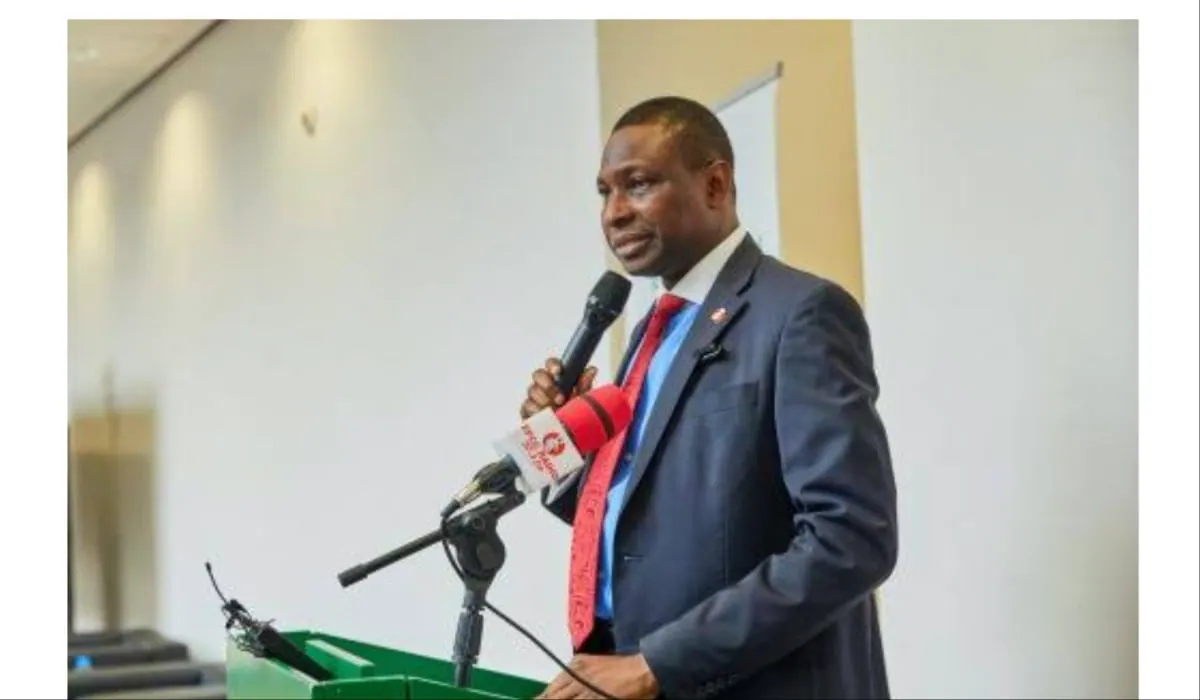
The Chairman of the Economic and Financial Crimes Commission, EFCC, Ola Olukoyede, has made a startling revelation about the level of corruption in Nigeria. Speaking at the 80th birthday celebration of former Attorney-General, Kanu Agabi, in Abuja, Olukoyede stated that Nigerian politicians steal public funds every minute. He expressed concern over the alarming number of corruption petitions received by the EFCC, with over 20,000 cases reported annually.
According to Olukoyede, the anti-graft agency receives a staggering number of petitions, most of which are shocking. He emphasized that the scale of corruption is so vast that it is killing Nigeria. The EFCC boss highlighted the need for collective action to address this issue, stating that Nigerians must come together to say no to the corrupt activities of some leaders.
Olukoyede cited examples of public officers who have amassed wealth through corrupt means. He noted that some officers resume office with less than N100,000 in their account but after three years, EFCC investigations reveal that they have accumulated millions of dollars. In some cases, these officers have built hundreds of houses while still in office.
The EFCC Chairman stressed the importance of accountability and transparency in public service. He emphasized that public officers must explain their actions while in office and be held accountable for their stewardship. Olukoyede's comments have sparked renewed calls for greater transparency and accountability in government.
Olukoyede's remarks have significant implications for the fight against corruption in Nigeria. With over 20,000 corruption petitions received annually, the EFCC faces a daunting task in investigating and prosecuting these cases. However, the EFCC boss remains committed to tackling corruption, emphasizing that it is a critical challenge that must be addressed.
The EFCC has been working to combat corruption and recover stolen public funds. In recent years, the agency has secured significant convictions and recovered billions of naira in stolen funds. However, the scale of corruption remains a major challenge, with many Nigerians expressing frustration and disillusionment with the government's efforts to tackle the issue.
The issue of corruption is a complex one, requiring a multifaceted approach to address. Olukoyede's comments highlight the need for a comprehensive strategy to tackle corruption, including stronger laws, improved transparency, and greater accountability. Ultimately, Nigerians must work together to create a culture of integrity and accountability in public service.
Key points
- The EFCC receives over 20,000 corruption petitions annually.
- Public officers often amass wealth through corrupt means, with some accumulating millions of dollars in just a few years.
- Olukoyede emphasizes the need for accountability and transparency in public service to combat corruption.