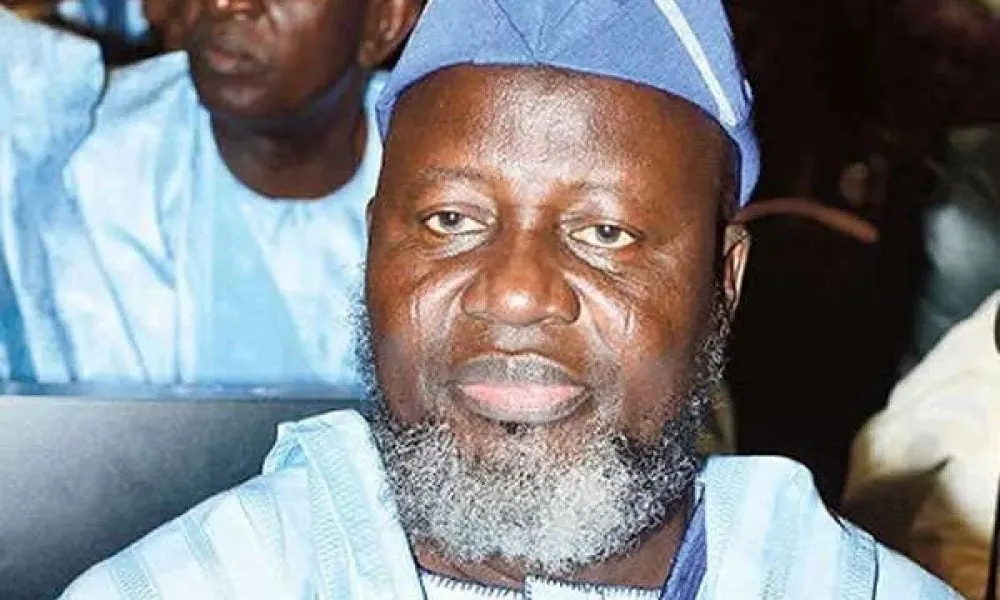
A former Minister of Communications, Adebayo Shittu, has urged the Federal Government to prioritize education as a fundamental right, rather than burdening students with loans. In an interview on Frontline, a current affairs programme on Eagle 102.5 FM, Ilese-Ijebu, Shittu emphasized that access to education must be considered alongside employment, healthcare, and general welfare of citizens. He stressed that government policies should focus on creating opportunities for children from poor homes.
Shittu questioned the rationale behind student loans at a time many graduates are jobless years after leaving tertiary institutions. He cited the example of graduates who have been jobless for ten years, saying that it doesn't make sense to burden them with loans. Instead, he believes in fundamental rights, emphasizing that education should be a priority for the government. Shittu's comments come as a significant critique of the government's approach to education and student financing.
The former minister challenged Nigerians to examine the education objectives in the 1999 Constitution, arguing that the government has a responsibility to promote access to education and create conditions for citizens to develop their potential. He emphasized that raising children should reflect communal values, rather than being left entirely to individual families. In his view, a child born into a community is the responsibility of the entire community to train, educate, and provide for.
Shittu noted that the issue is about government priorities and management of resources. He recalled that previous governments invested in free education, healthcare, and other social services. According to him, Nigeria has the resources to improve access to education, citing Rwanda as an example of a country that has invested heavily in human development. Shittu expressed concern over economic hardship, saying he receives messages from students who struggle to afford basic needs, including food.
The former minister emphasized that government policies should be judged by their impact on ordinary Nigerians, especially poor families. He called for stronger implementation of constitutional provisions on education, stressing that investing in education would reduce future social problems by equipping young Nigerians with skills to contribute meaningfully to society. Shittu's comments highlight the need for a re-evaluation of the government's approach to education and its impact on citizens.
Shittu's advocacy for prioritizing education as a fundamental right resonates with many Nigerians who are concerned about the state of education in the country. He emphasized that education is a critical component of human development and that the government has a responsibility to ensure that all citizens have access to quality education. By doing so, the government can create opportunities for citizens to develop their potential and contribute to the country's growth and development.
The issue of student loans and access to education is likely to continue to be a topic of debate in Nigeria. Shittu's comments are a significant contribution to the conversation, highlighting the need for the government to prioritize education as a fundamental right. As the government continues to grapple with the challenges of education and student financing, Shittu's advocacy for a more equitable approach to education is likely to remain a relevant and important voice in the conversation.
Key points
- Adebayo Shittu urges FG to treat education as a fundamental right, not burden students with loans.