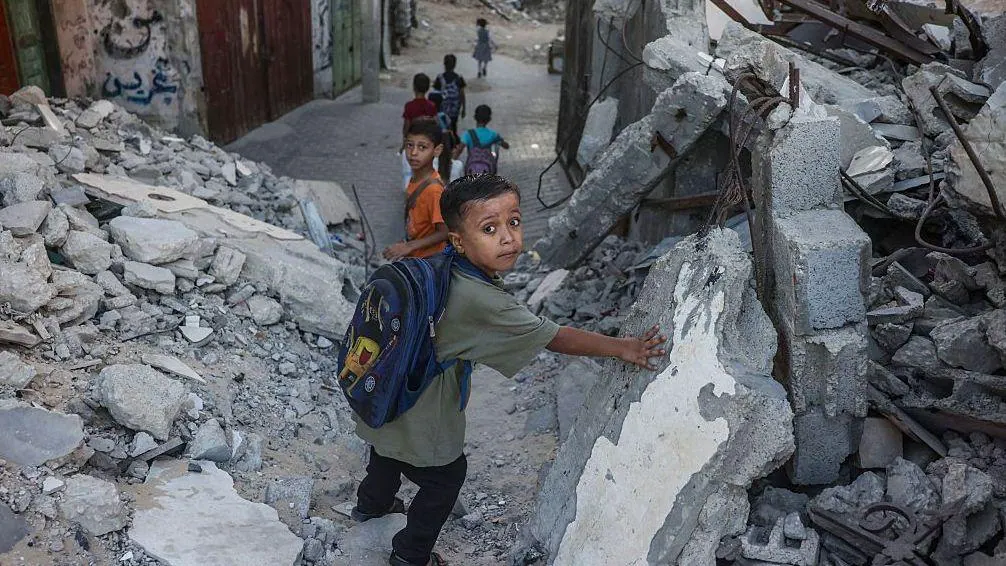
The education sector in conflict zones, particularly in Gaza, southern Lebanon, Yemen, and Sudan, is facing an unprecedented crisis that threatens the right to education for millions of children. Wars, displacement, and infrastructure destruction have disrupted schools, turning many into shelters for civilians, while teachers and students have been forced to leave their areas or stop studying. The lack of security, widespread poverty, and psychological pressures have made schools not just places of learning but also part of the daily struggle for survival.
In Gaza, the new academic year has begun in catastrophic conditions, similar to previous years, after extensive damage to schools and educational facilities, with some converted into shelters for displaced persons. With great difficulty in reopening traditional schools, education is being organized for around 541,000 students through nearly 700 educational and virtual points, mostly operating in temporary and limited environments, such as tents or unprepared buildings. Virtual schools have also been established to accommodate students who cannot access in-person education.
In southern Lebanon, the new academic year is starting amidst widespread displacement and damage to border villages and schools. Some educational institutions have stopped working, while others have been converted into shelters for displaced families. Schools that have managed to continue face a lack of equipment and resources, as well as difficulty in securing a stable and safe educational environment. Students are suffering from deep psychological effects due to bombing, fear, and repeated displacement, affecting their ability to focus and achieve academically.
Yemen's education sector is experiencing continuous deterioration, with around 3.2 million children out of the education system, and millions more facing disruption in their educational path due to war, poverty, and displacement. Thousands of schools have been damaged, with 2,500 becoming unfit for teaching or used as shelters for displaced persons. Economic hardship forces many Yemeni families to take their children out of school and into the workforce to help secure basic needs.
In Sudan, the ongoing war has disrupted the educational process on a large scale, depriving around 8 million children of education during the 2025-2026 academic year. Many schools have been closed or converted into shelters for displaced persons and medical facilities, while other educational institutions have been damaged or rendered unusable. The harm has not been limited to basic education but has also extended to universities and higher education institutions, particularly in Khartoum and the Gezira state.
The crises in these regions share similar causes and consequences but differ in the scale of damage and nature of challenges. While some parties attempt to provide temporary alternatives, such as field education or distance learning, these solutions remain limited due to lack of electricity, internet, books, and educational staff. The continued disruption of education threatens to increase dropout rates, enhance the risks of child labor, recruitment, and early marriage, and widen educational and psychological gaps among a whole generation of children.
The situation calls for urgent attention and action to address the educational crisis in conflict zones. Efforts to provide safe and stable educational environments, support teachers and students, and ensure the continuation of education are crucial. The international community, governments, and local organizations must work together to mitigate the impact of conflict on education and protect the future of millions of children in the Arab world.
Key points
- The Arab world's education sector faces significant challenges in conflict zones.
- Millions of children are out of school or facing disruption in their educational path.
- Urgent action is needed to address the educational crisis and protect the future of children in conflict zones.