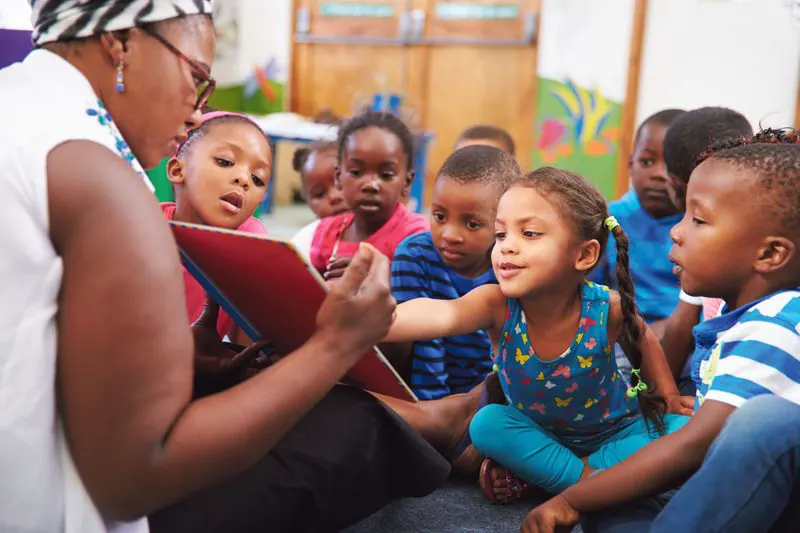
The education gap in South Africa is a pressing concern, with 1.3 million children not enrolled in any early childhood care and education (ECCE) programme. For these children, caregivers are often the primary drivers of development, but they lack the necessary support and resources. According to the Department of Basic Education's FUNS benchmark study, only 31% of Grade 1 pupils meet the home language reading benchmark, indicating a crisis in preschool years. This crisis has severe implications for the future of these children and the country as a whole.
The 2024 Thrive by Five Index found that 56% of caregivers believed their child was developing at the same pace as their peers, and 35% believed their child was ahead. However, the same study revealed that these reflections were not accurate. In reality, 82% of children not enrolled in ECCE centres are unable to do basic tasks expected of a child their age and are falling behind their peers. This highlights the need for targeted support for caregivers and children outside of centre-based programmes.
The South African government is making efforts to address this issue, with the Department of Basic Education's 2030 Strategy providing a framework for ECCE sector reform. The government aims to enrol seven million children in structured programmes by 2030 and increase the quality of these programmes. Additionally, the $29-million ECCE Outcomes Fund, launched in 2025, seeks to increase both the reach and quality of ECCE programming. These initiatives are crucial steps towards addressing the education gap.
Despite these efforts, there is a missing piece that deserves equal attention: support for caregivers and children who remain outside centre-based programmes. Many NGOs have already stepped in to help close this gap with outreach, caregiver training, and home visiting programmes targeting households with out-of-centre children. These programmes have shown a positive impact on raising awareness of the importance of play and reading with children and providing caregivers with tools to engage in their children's educational journey.
The importance of investing in out-of-centre households cannot be overstated. It is estimated that more than 57% of children in South Africa are growing up in multidimensional poverty, with profound implications for their development and the country's future. International research has found that having the support of at least one stable and committed relationship with a parent, caregiver, or other adult is crucial for a child's resilience and success.
Proof of the impact of out-of-centre early learning and caregiver support programmes comes from surveys of households benefiting from these initiatives. These programmes can be delivered at scale, leveraging existing workforces such as National Youth Service and Public Employment Programmes. Training these workers as early learning and caregiver-support workers builds delivery capacity and creates systemic change by building a generation that values early learning and reading.
As Literacy Month comes to a close, it is essential to recognize that solving South Africa's literacy crisis begins long before a child enters a classroom or early learning centre. Equipping caregivers as a child's first and sometimes only early educator is a powerful investment in a child's future. The government and donors must recognize out-of-centre early learning and caregiver support as a legitimate, evidence-based pathway for supporting children whose caregivers cannot or choose not to place them in centre-based programmes.
Key points
- The South African government aims to enrol seven million children in structured ECCE programmes by 2030.
- 82% of children not enrolled in ECCE centres are unable to do basic tasks expected of a child their age.
- Investing in out-of-centre early learning and caregiver support programmes can have a positive impact on children's development and resilience.