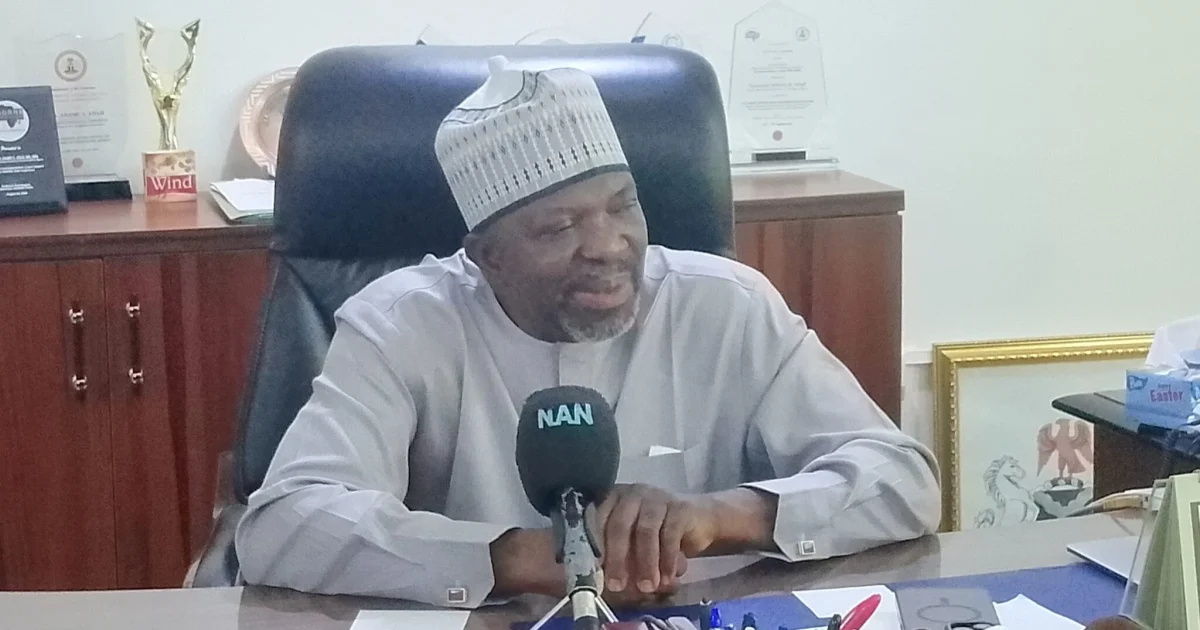
The Director-General of the National Boundary Commission, Adamu Adaji, has revealed that the boundary disputes between Edo and Kogi states remain unresolved. Adaji stated this in an interview with the News Agency of Nigeria in Abuja on Sunday. He said technical and administrative efforts had produced an approved boundary line, but implementation faced resistance from communities along the corridor.
The Edo-Kogi boundary was defined under Legal Notice No. 126 of 1954, which established the boundary between the Northern and Western regions. However, some physical features referenced in the document have disappeared over time, making it difficult for experts to accurately trace the boundary. Adaji said technical experts had attempted to interpret the historical documents, but the disappearance of landmarks introduced subjective judgment into determining the boundary.
Adaji said the commission considered the claims of both states and eventually produced a line regarded as the boundary between Edo and Kogi. The proposed boundary was subsequently approved by the Internal Boundary Committee, paving the way for its physical demarcation. However, the exercise encountered resistance when the contractor moved to establish the approved boundary on the ground.
Communities along the corridor objected, arguing that the proposed line did not correspond with their understanding of the boundary. The affected communities consequently resisted the demarcation, prompting the commission to engage stakeholders and seek broader agreement. Adaji said the parties met again earlier in the year to determine how the approved boundary could be physically established and assess its implications.
The agreement was challenged after some parties withheld full cooperation and presented documents indicating possible changes to the boundary. Adaji said the commission had agreed to commence demarcation when resources became available. The Edo-Kogi boundary process remained ongoing, with the commission addressing farmland disputes between Ibaji communities in Kogi and Uloshi/Esan South-East in Edo.
The National Boundary Commission is making progress on other boundary disputes, including the Abia-Anambra boundary. Adaji said the two states shared close cultural and ethnic ties, with communities on both sides maintaining strong social relationships. The boundary stretches about 23 kilometres, with 15 kilometres already agreed upon, leaving approximately eight kilometres unresolved.
Adaji urged communities to cooperate, stressing that the commission was promoting enlightenment and cooperation among states, local governments and boundary communities. He advised governments and stakeholders to protect the property rights of people living along boundary corridors, regardless of which state ultimately administers their locations.
Key points
- The boundary disputes between Edo and Kogi states remain unresolved due to vanished landmarks, competing claims and community resistance.
- The National Boundary Commission has made progress on the Abia-Anambra boundary, with 15 kilometres of the 23-kilometre stretch already agreed upon.
- The commission is promoting enlightenment and cooperation among states, local governments and boundary communities to resolve boundary disputes.