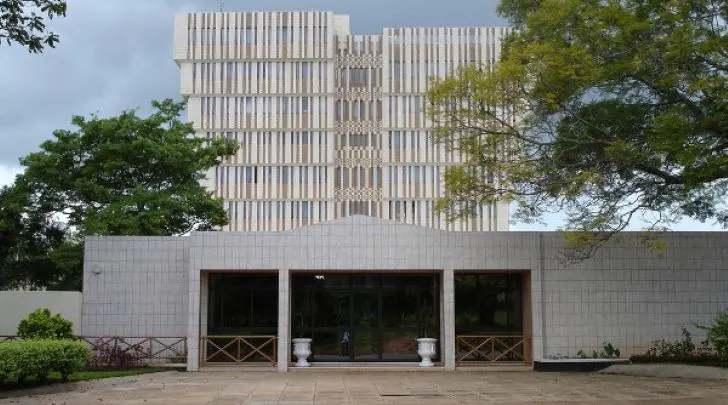
The Economics Association of Malawi (Ecama) has expressed cautious optimism about the Reserve Bank of Malawi's (RBM) new restrictions on physical foreign currency holdings. According to Ecama president Bertha Bangara-Chikadza, the measures could improve forex availability in the formal market by encouraging individuals and businesses to deposit their holdings with banks. This, she said, could reduce the amount of foreign currency circulating outside the banking system.
Under the new restrictions, individuals are prohibited from physically possessing more than $1,000 in foreign currency without RBM permission. Additionally, anyone taking or sending more than $1,000 in foreign currency outside Malawi must show that it was obtained from an authorised dealer or obtain RBM permission. The amount of Malawi kwacha that can be taken or sent abroad without permission is limited to the equivalent of $5,000 for cross-border traders and $100 for other travellers.
Bangara-Chikadza noted that the success of the restrictions depends on addressing incentives that continue to push holders towards informal channels. She cited the wide gap between official and parallel-market exchange rates as a major disincentive for forex holders to use formal channels. Financial Market Dealers Association of Malawi president Leslie Fatch agreed that the restrictions could improve market liquidity by discouraging people from keeping foreign currency outside the formal financial system.
Scotland-based Malawian economist Velli Nyirongo said the restrictions could improve circulation and retention of foreign currency within the formal financial system. However, he warned that they could also produce unintended consequences, such as encouraging transactions through informal channels. Nyirongo emphasised that the effectiveness of the measures would depend on confidence in banks, access to forex for legitimate requirements, and whether the official exchange rate reasonably reflects market conditions.
The reactions come as Malawi continues to face persistent forex shortages. According to RBM's July 2026 Monthly Economic Review, total foreign exchange reserves declined to $600.6 million, equivalent to 2.4 months of imports, from $616.1 million or 2.5 months in June. This shortage has significant implications for the country's economy, and economists are urging the government to implement complementary policies to address the issue.
Bangara-Chikadza and Nyirongo agreed that regulating existing forex cannot resolve the underlying shortage. Bangara-Chikadza said the measures need to be complemented by policies to increase exports, investment, and remittance inflows. Nyirongo called for reforms to improve export competitiveness, attract productive capital, strengthen confidence in the formal forex market, and reduce distortions between official and market exchange rates.
The economists emphasised that the central issue is not simply how Malawi controls the foreign exchange it has, but how it creates the conditions to generate significantly more of it. They urged the government to implement policies that promote economic growth, increase foreign exchange earnings, and reduce reliance on informal channels. By doing so, Malawi can address its forex shortages and promote economic stability.
Key points
- The Reserve Bank of Malawi's new restrictions on physical foreign currency holdings aim to improve forex availability in the formal market.
- Economists caution that the success of the restrictions depends on addressing incentives that push holders towards informal channels.
- Complementary policies, such as increasing exports and investment, are needed to address the underlying forex shortage.