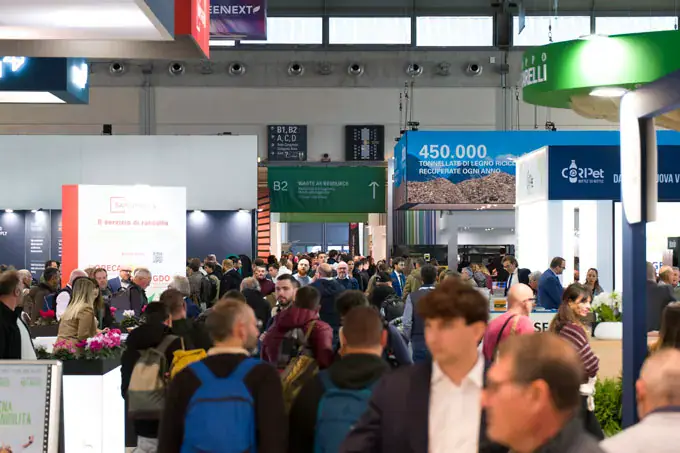
The 15th edition of the General States of the Green Economy took place in Rimini, Italy, from November 3 to 6, 2026, as part of Ecomondo. This event, organized by the Italian Foundation for Sustainable Development, brought together experts to discuss international perspectives on sustainable development. The conference aimed to examine the intersection of economic and environmental policies, particularly in the context of geopolitical tensions and dependence on imported resources.
A key finding from the event came from a study by CONAI and TEHA Group, which estimated that the European recycling industry generates an annual economic impact of €555 billion. This includes €222 billion in added value and supports over three million jobs. These figures are expected to inform discussions around the future Circular Economy Act in Europe. The goal is to strengthen the market for secondary raw materials, improve coordination between national systems, and promote industrial investments.
The event also featured the third ESG CEO Summit, where several leaders discussed how to make sustainability a factor of growth. The discussions centered on investment decisions, communication of environmental commitments, development of skills, and cooperation between companies. This focus reflects a growing concern in the industry to align environmental objectives with economic value creation.
The textile industry was another significant topic at Ecomondo, with discussions on the digital product passport required under European ecodesign regulations. Issues such as traceability, reliability of information, reuse, repair, and quality of recycled materials were examined. Additionally, debates on climate resilience in coastal territories highlighted the importance of collaboration between European institutions, local authorities, and economic actors.
On November 5, 2026, Ecomondo hosted the sixth edition of the Africa Green Growth Forum, which focused on the Mattei Plan and African sustainable development. Another event discussed strategic corridors between the European Union and Africa for critical raw materials. These discussions expanded the scope of Ecomondo to include Euro-African economic relations, where access to resources, industrial partnerships, and investments are central to the ecological transition.
The Lorenzo Cagnoni Awards, held as part of Ecomondo 2026, recognized innovations in green technology. A conference also examined the strategic and operational aspects of implementing the European Industrial Emissions Directive 2.0, focusing on new authorization procedures, environmental and health assessments, and jurisprudential orientations.
Ecomondo 2026 demonstrated the growing importance of aligning economic competitiveness with environmental sustainability. The event highlighted the significant economic impact of the recycling industry and the need for cooperation between Europe and Africa to address critical challenges in sustainable development. As the world moves towards a more circular economy, events like Ecomondo play a crucial role in shaping policies and practices that support green growth.
Key points
- The European recycling industry generates an annual economic impact of €555 billion.
- Ecomondo 2026 focused on aligning environmental objectives with economic value creation.
- The event promoted cooperation between Europe and Africa on sustainable development and critical raw materials.